
 EN
EN
 ar
ar bg
bg hr
hr cs
cs da
da nl
nl fi
fi fr
fr de
de el
el hi
hi it
it ko
ko no
no pl
pl pt
pt ro
ro ru
ru es
es sv
sv tl
tl iw
iw id
id lv
lv lt
lt sr
sr sk
sk sl
sl uk
uk vi
vi et
et hu
hu th
th tr
tr fa
fa ms
ms hy
hy ka
ka ur
ur bn
bn mn
mn ta
ta kk
kk uz
uz ku
ku
Hollow Load Cells for Bridge Cable & Anchor Monitoring: Selection Guide & Specifications
Cable-stayed bridges, pre-stressed concrete decks, and dam anchors rely on precisely calibrated tension to maintain structural integrity. Deviations as small as five percent can accelerate fatigue failure. They can also trigger sudden, catastrophic structural overload. Traditional force measurement methods involve jack pressure gauges and periodic lift-off testing. These methods are intermittent and highly labor-intensive. Furthermore, they are entirely unsuitable for permanent, long-term structural health monitoring. This gap in monitoring leaves critical infrastructure vulnerable.
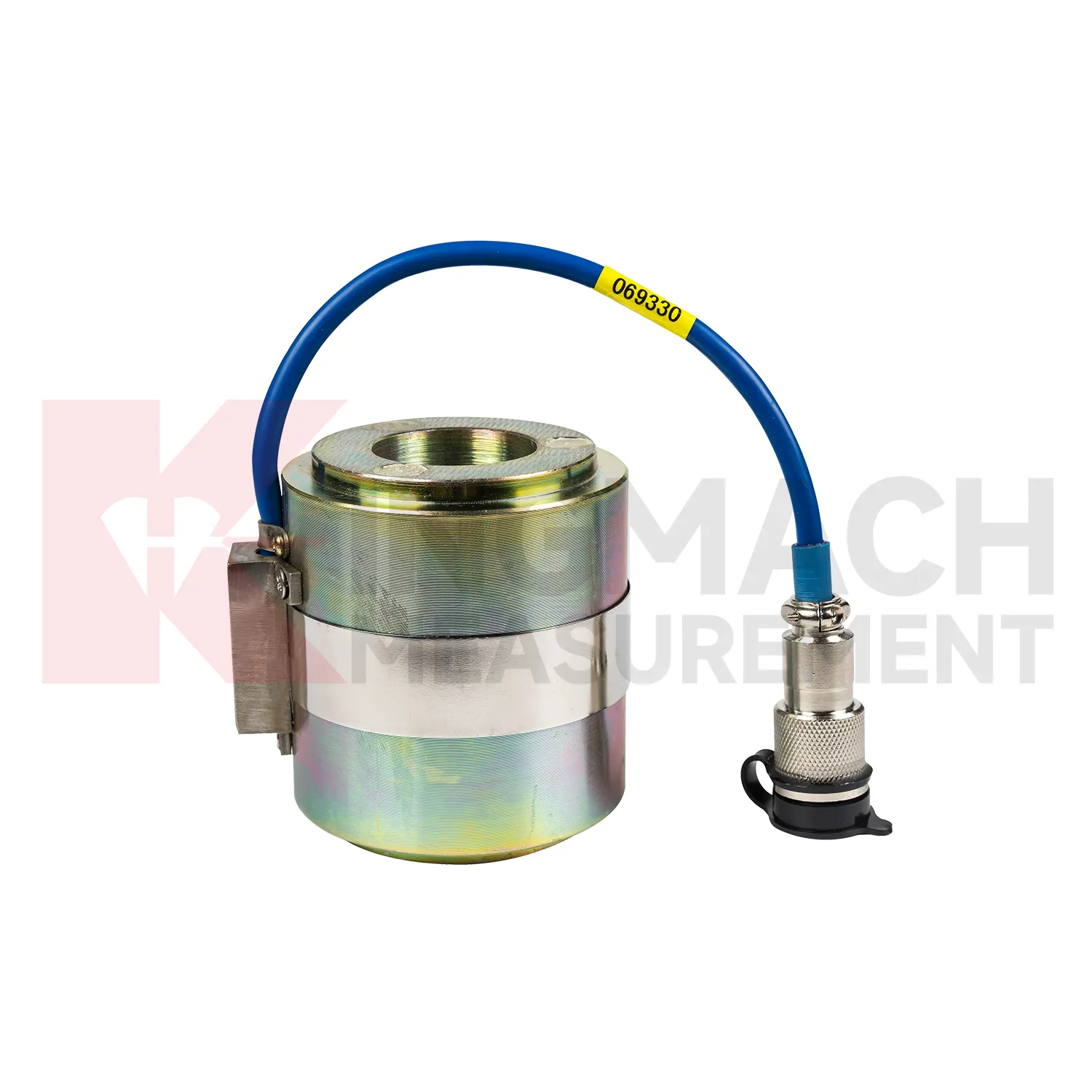
The hollow load cell provides an elegant, permanent solution to this problem. Also known as a through-hole or annular load cell, this sensor fits directly over the bolt, tendon, or anchor rod. It measures compressive force continuously without interrupting the structural system. This article will explore the working principles and technology advantages of these sensors. It will also cover model selection, key applications, system integration, and critical procurement criteria.
How a Vibrating Wire Hollow Load Cell Actually Works: The Annular Multi-String Design Explained
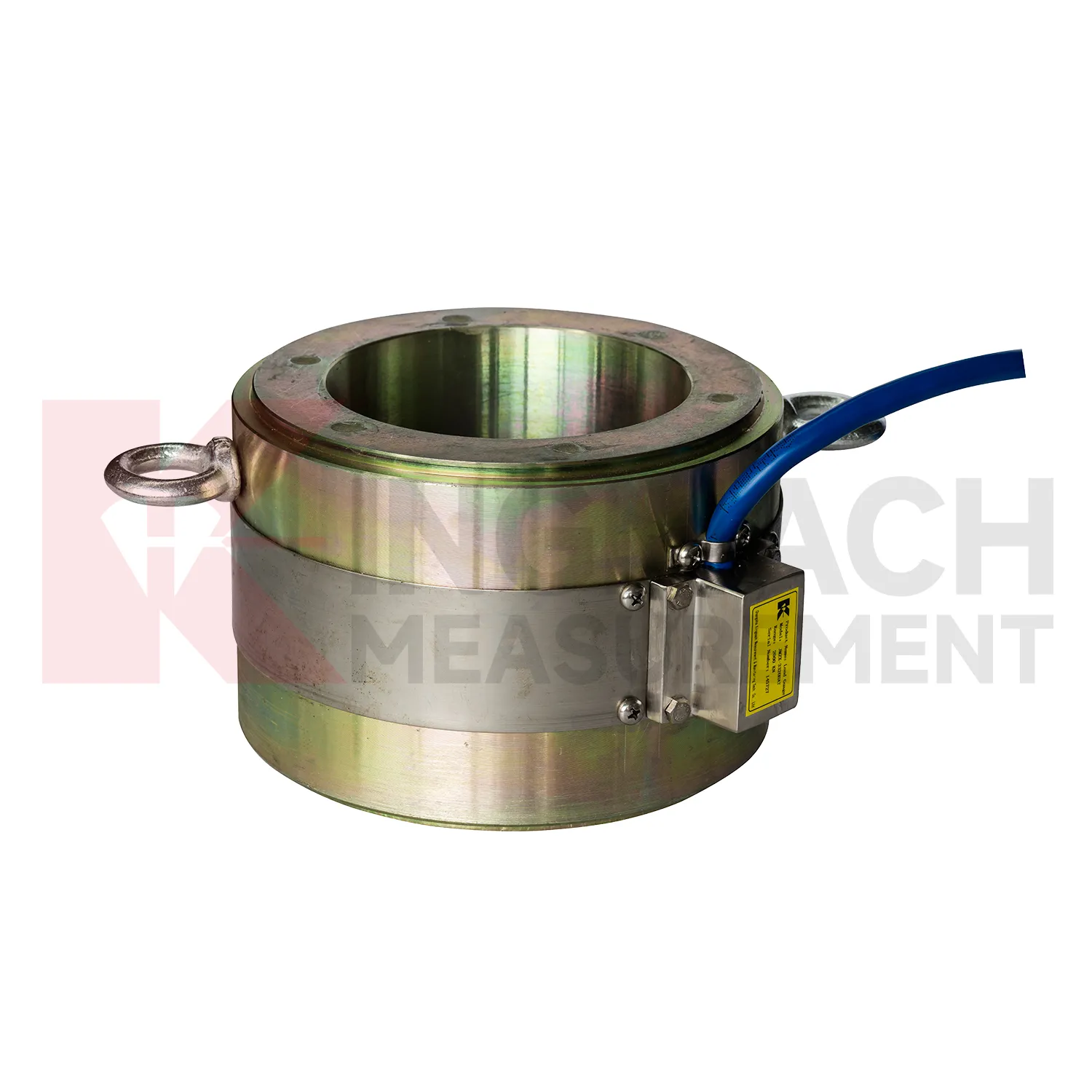
Engineers must understand how a vibrating wire hollow load cell actually works to specify it correctly. The device relies on a robust annular ring body. This elastic-steel ring undergoes a rigorous multi-stage stability treatment. It distributes the compressive load uniformly around its circumference. This annular design eliminates the eccentric loading errors that frequently plague flat-plate load cells during misaligned installations.
Inside this ring, manufacturers utilize a multi-chord vibrating wire arrangement. Depending on the capacity, the sensor uses three-, four-, or six-chord string configurations. These multiple chords average the stress readings across the ring's cross-section. Because of this layout, the JMZX-3XXXHAT series reports loads with a highly sensitive 0.1 to 1 KN resolution, even at a massive 8,000 KN full-scale capacity.
The core mechanism is the vibrating wire principle itself. Each ultra-high-strength steel wire is secured using international-standard anchor welding. The wire's excitation frequency is directly proportional to its tension. This frequency-based output remains completely immune to cable resistance variations and electromagnetic interference. This electrical immunity is essential across long cable runs on busy civil construction sites.
Furthermore, an embedded intelligent chip permanently stores the sensor's unique calibration factors. The chip can log up to 800 measurement records, including timestamps, temperatures, and zero-correction values. This feature enables engineers to perform field calibration verification without returning the unit to the factory. Finally, a built-in temperature sensor provides automatic temperature correction at every single measurement cycle. This eliminates thermally induced false readings in outdoor or buried installations.
Vibrating Wire vs. Strain Gauge vs. Hydraulic: Why the Hollow VW Cell Wins for Long-Term Civil Monitoring
Buyers often compare hollow load cells solely based on the initial purchase price. However, you must evaluate the total cost of monitoring. This includes long-term zero drift, maintenance requirements, signal distance limitations, and overall data reliability.
- Resistive (Foil) Hollow Load Cells: These sensors offer a lower upfront cost. However, they are highly susceptible to zero-drift over time. They also suffer from moisture-induced resistance changes and rely heavily on amplifiers for cable lengths extending beyond 50 meters. They are unsuitable for permanent unattended monitoring.
- Hydraulic Load Cells: These devices completely avoid electrical interference concerns. However, they require frequent fluid maintenance. They are prone to leaks in embedded or confined structural installations. Furthermore, they cannot transmit readings to remote data loggers without adding secondary pressure transducers.
- Vibrating Wire Hollow Load Cells: These sensors produce a frequency output that remains stable over decades. The signals transmit perfectly over kilometer-scale cable runs without distortion. They require no ongoing calibration gas or fluid. They are fully sealed and waterproof.
The JMZX-3XXXHAT series boasts a 50-year design life. For infrastructure projects with 20- to 50-year asset lives, the vibrating wire hollow cell is the only technology where mid-project sensor replacement is not a required planning assumption.
| Technology Type | Long-Term Stability | Maximum Cable Run | Maintenance Requirement | Embedded Suitability |
|---|---|---|---|---|
| Resistive (Foil) | Poor (Zero Drift) | < 50 meters | Moderate (Calibration) | Low |
| Hydraulic | Moderate | N/A (Requires Transducer) | High (Fluid Checks) | Low (Leak Risk) |
| Vibrating Wire | Excellent | > 1,000 meters | Zero (Maintenance-Free) | High (Fully Sealed) |
JMZX-3XXXHAT Series: Capacity Range, Chord Configuration, and Dimensional Reference
Procurement engineers need precise specifications to match sensors with project load levels. The JMZX-3XXXHAT Series offers a comprehensive capacity range spanning from 500 KN to 8,000 KN across eight standard models. This extensive range covers everything from single rock anchors to massive cable-stayed bridge cables.
The chord count scales intelligently with the sensor's capacity. Models up to 2,000 KN use a three-chord configuration. The 3,000 KN model uses four chords. Models rated 4,000 KN and above use six chords. This structural scaling maintains measurement accuracy as the ring diameter increases. The sensor sensitivity is 0.1 KN at the 500 KN level. It steps to a 1 KN sensitivity for all models above 1,000 KN. This precision easily meets the typical ±0.1% requirement found in structural cable monitoring codes.
These load cells feature a compact height ranging from 90 to 130 millimeters. This low profile fits seamlessly within standard anchor heads and bearing plate assemblies without requiring structural modifications. For non-standard bore diameters or unique environmental needs, a custom JMZX-3X00 model is also available.
JMZX-3XXXHAT Model Reference Table
| Model | Capacity | Sensitivity | Inner Bore (Ø) | Height | Configuration |
|---|---|---|---|---|---|
| JMZX-3405AT | 500 KN | 0.1 KN | 70 mm | 90 mm | 3-chord |
| JMZX-3410AT | 1,000 KN | 1 KN | 100 mm | 90 mm | 3-chord |
| JMZX-3520AT | 2,000 KN | 1 KN | 140 mm | 120 mm | 3-chord |
| JMZX-3530AT | 3,000 KN | 1 KN | 170 mm | 120 mm | 4-chord |
| JMZX-3540AT | 4,000 KN | 1 KN | 200 mm | 130 mm | 6-chord |
| JMZX-3550AT | 5,000 KN | 1 KN | 220 mm | 130 mm | 6-chord |
| JMZX-3560AT | 6,000 KN | 1 KN | 240 mm | 130 mm | 6-chord |
| JMZX-3580AT | 8,000 KN | 1 KN | 280 mm | 130 mm | 6-chord |
Where Hollow Load Cells Are Deployed: Six High-Stakes Engineering Scenarios
Engineers deploy hollow load cells across a variety of high-stakes environments. Each application presents specific safety rationales and long-term monitoring challenges.
- Cable-Stayed & Suspension Bridges: Stay cables must remain within 3 to 5 percent of their design tension to ensure fatigue life compliance. Hollow vibrating wire load cells sit permanently at the anchorage zone. They provide continuous cable force data directly to bridge management systems. This completely replaces costly, periodic lift-off tests.
- Post-Tensioned Concrete Structures: Tendon force loss occurs progressively due to creep, shrinkage, and relaxation in concrete bridges and nuclear containment structures. Embedded annular load cells sit over the anchor bearing plate. They track long-term force evolution. This data directly informs future re-tensioning decisions.
- Dam & Slope Anchors: Rock bolts and grouted anchors stabilize dam abutments and cut slopes. These are critical safety elements. The waterproof, corrosion-resistant JMZX-3XXXHAT perfectly suits long-term monitoring in saturated, buried, or submerged soil conditions.
- Railway & Highway Construction: Retaining walls and soil nail walls utilize temporary and permanent anchor systems. These systems require precise load verification during acceptance testing and during active service. The hollow load cell handles both tasks as a single installed unit.
- Wind Tower Foundations: Technicians must verify and monitor the anchor bolt pre-stress in wind turbine tower base flanges. Hollow load cells provide a direct, non-intrusive measurement. They require absolutely no modification to the anchor bolt system itself.
- Lifting & Crane Systems: Shackle-mounted or clevis-mounted hollow cells measure dynamic and static loads in heavy lifting equipment. The compact dimensions and digital output are highly valued in this industrial secondary market.
From Sensor to Dashboard: Integrating Hollow Load Cells into a Complete SHM Data System
A single hollow load cell is only as useful as the data system that surrounds it. You must integrate these sensors into a complete, end-to-end structural health monitoring system.
- On-Demand Readout: Kingmach's compatible vibrating wire readout units display direct load values in Kilonewtons (KN). They read the stored calibration factors directly from the sensor's memory chip. You do not need external paper calibration tables on the job site.
- Automated Data Acquisition: Multi-channel data loggers support bus-wired JMZX-3XXXHAT sensor arrays. They offer configurable polling intervals, alarm thresholds, and remote telemetry options like 4G, LoRa, or Ethernet. This enables true 24/7 unattended monitoring of massive cable arrays.
- Instrumentation Cables: Kingmach shielded VW cables preserve signal integrity flawlessly. They perform perfectly over multi-hundred-meter runs within electrically noisy civil construction environments.
- Visualization Software: Real-time software dashboards display load trends and temperature-corrected values. They generate automatic overload alerts and facilitate historical trend analysis. This directly supports structural safety assessments and maintenance workflows.
Specifying the sensor, logger, and software from one unified manufacturer eliminates firmware compatibility risks. It also dramatically simplifies technical support escalations on international projects.
Specifying and Sourcing a Hollow Load Cell: Six Questions Every International Buyer Should Ask
International procurement teams need an objective framework to evaluate Chinese sensor manufacturers. You should ask six critical questions when sourcing a hollow load cell.
1. Does the sensor carry traceable certification?
You must require strict compliance with standards like GB/T 13606-2007 and DL/T 269-2022. Third-party verified sensors significantly reduce project approval friction.
2. Is the calibration traceable directly to the device?
The Kingmach hollow load cell stores calibration constants in an onboard chip. This eliminates paper-record dependency. It enables easy field verification with a standard readout unit.
3. What is the stated service life?
You must insist on a formally documented design life figure. The 50-year design life of the Kingmach hollow load cel should serve as a contractual baseline, not just a verbal assurance.
4. Can the supplier customize the product?
Infrastructure projects often require non-standard bore diameters, specific capacity ranges, or unique connector types. A manufacturer with robust in-house design capabilities will respond in days rather than months.
5. What does the after-sales support look like?
Look for a 24/7 technical hotline with a one-hour initial response time. Complex issues must be resolved within 48 hours. This responsiveness is critical for live infrastructure projects.
6. Is the delivery timeline contractually backed?
The supplier must offer in-stock standard models within 48 hours. Project-scale orders require strict contractual schedules and regular manufacturing progress updates.
Choosing Confidence Over Guesswork: Your Decision Framework and Next Step
Hollow load cells fundamentally transform cable force monitoring. They replace periodic, intrusive testing exercises with a continuous, automated safety system. You must follow a clear decision framework. First, confirm your load type and overall capacity. Second, select the proper chord configuration. Third, verify the exact bore diameter for your specific tendon or anchor. Fourth, confirm your waterproofing and temperature requirements. Finally, integrate the sensor with a reliable data logger and visualization software.
The 50-year design life of the Kingmach hollow load cel provides incredible long-term value. The total cost of ownership includes avoided re-installations, re-calibrations, and prevented data loss. This long-term cost is substantially lower than cheaper alternative foil technologies. If you are unsure which JMZX-3XXXHAT model fits your project, you can share your specifications with Kingmach's engineering team. We will provide a free model recommendation and a customized quote.
Planning a cable-stayed bridge or anchor project? Get a free sensor recommendation + customized quote from Kingmach engineers — response within 24 hours.
🔗 [Get My Free Recommendation →]
📧 [email protected]
FAQs
1. What is the difference between a hollow load cell and a solid load cell?
A hollow load cell features a central bore allowing a bolt or cable to pass completely through it, measuring tension by reacting against an anchor plate. A solid load cell lacks this central hole and typically measures direct in-line compression or tension.
2. How do you install a hollow load cell on a post-tensioned tendon?
You slide the annular sensor directly over the tendon or anchor rod before attaching the anchor head and bearing plate. The load cell sits securely sandwiched between the concrete structure and the steel anchor block.
3. Can hollow load cells be used for dynamic load measurement?
Vibrating wire hollow load cells excel at static and slow-varying loads due to the physical time required to sweep the wire frequency. For high-frequency dynamic loads, resistive foil or piezoelectric load cells are generally preferred.
4. What cable length is supported by a vibrating wire hollow load cell?
Because they utilize a frequency-based output rather than a voltage signal, vibrating wire sensors can easily transmit accurate data over shielded cables exceeding 1,000 meters without any signal loss or distortion.
5. How does a multi-chord design improve load cell accuracy?
A multi-chord design spaces several independent vibrating wires evenly around the load cell's inner circumference. This averages out the stress measurements across the ring, which actively eliminates errors caused by off-center or eccentric loading.
6. Can I combine hollow load cells with vibrating wire strain gauges in one monitoring system?
Yes. Hollow load cells and vibrating wire strain gauges are often integrated into the same monitoring system. The load cell measures the applied force, while the strain gauge measures structural deformation, providing complementary data for more accurate performance assessment.
7. What is the difference between multi-chord and single-chord configurations, and when should I choose each?
A single-chord configuration measures load at one specific location and is suitable for straightforward load monitoring applications. A multi-chord configuration monitors loads across multiple members or points, making it ideal for complex structures where load distribution and balance are critical.
8. How do I verify long-term sensor health without removing the installed unit?
Long-term sensor health can be verified through regular zero checks, trend analysis of historical data, comparison with adjacent sensors, and routine inspection of cables and connections. These methods help detect potential drift or performance issues without removing the sensor from service.
9. What warranty and recalibration services does Kingmach offer internationally?
Kingmach supports international customers with technical consultation, installation guidance, commissioning assistance, and after-sales service throughout the project lifecycle. All load cells are supplied with factory calibration data and quality documentation. For long-term monitoring programs, Kingmach can provide calibration verification support, performance evaluation recommendations, and technical assistance to help maintain measurement reliability. Customers can contact the engineering team directly for troubleshooting, replacement planning, and system optimization support when required.
Written by Kingmach Engineering Team — supporting infrastructure projects worldwide since 2001