
 EN
EN
 ar
ar bg
bg hr
hr cs
cs da
da nl
nl fi
fi fr
fr de
de el
el hi
hi it
it ko
ko no
no pl
pl pt
pt ro
ro ru
ru es
es sv
sv tl
tl iw
iw id
id lv
lv lt
lt sr
sr sk
sk sl
sl uk
uk vi
vi et
et hu
hu th
th tr
tr fa
fa ms
ms hy
hy ka
ka ur
ur bn
bn mn
mn ta
ta kk
kk uz
uz ku
ku
Kingmach Vibrating Wire Sensors for Structural Health Monitoring
Vibrating wire sensors for structural health monitoring are useful when a bridge, tunnel, dam, slope, or foundation requires stable long-term measurements and the data must travel through a dependable acquisition chain. The purchase decision starts with the monitored variable, not the sensor label. Buyers must define the movement or force being measured, expected range, installation geometry, environmental exposure, sampling interval, readout architecture, alarm logic, and maintenance plan before comparing models.
Key takeaways
- Define the monitored variable and sensing principle first. Frequency output does not automatically mean vibrating wire.
- Specify the full measurement chain, including mounting, cable protection, readout, communications, software, alarms, and maintenance responsibility.
- Compare configured lifecycle cost and project evidence rather than choosing by range, accuracy, or sensor unit price alone.
Table of contents
- What a vibrating wire sensor measures in SHM
- Build the measurement chain before choosing a model
- Eight movement-monitoring options and where they fit
- Verified project evidence and what buyers should learn
- Data logging, remote monitoring, and product video
- Procurement and commercial terms
- RFQ checklist for an SHM sensor package
- Common buying mistakes that increase monitoring risk
- Request a model and system review
- Frequently asked questions
What a vibrating wire sensor measures in SHM
A vibrating wire sensor converts a mechanical change into a change in the resonant frequency of a tensioned wire. A compatible readout excites the wire, detects the response, and applies calibration coefficients to calculate strain, pressure, load, or another engineering value. Frequency is the measured quantity, so normal cable-resistance variation has less influence on the result than it can have on a low-level resistance or voltage signal. Cable continuity, shielding, moisture protection, and readout compatibility still matter.
For a deeper explanation of the sensing mechanism, review how vibrating wire strain gauges work. The engineering advantage is strongest in slow, long-term monitoring where stability and long cable routes matter more than high-frequency dynamic response. A vibrating wire sensor is not automatically the right choice for rapid vibration, large global movement, or a geometry that requires a flexible, pull-wire, optical, or satellite-based measurement path.
Terminology check before the RFQ
Do not use "vibrating wire" as a generic name for every frequency-output or digital displacement instrument. Kingmach JMDL-21XXAT, JMDL-22XXAT, JMDL-24XXAT, JMDL-31XXAT, and JMDL-32XXAT models use inductive frequency-modulation principles. JMDL-52XXADT uses two coupled inductive coils, JMLS-22XXADT uses a wire-rope mechanism with resistance conversion and digital communication, and JMBD-1050 uses GNSS positioning. Correct terminology prevents mismatched readout channels, wiring assumptions, and calibration procedures.
Build the measurement chain before choosing a model
A sensor is one layer of an SHM system. The measurement point, mounting hardware, protected cable route, readout or logger, communications link, software, alarm thresholds, and response procedure must work as one chain. A highly stable sensor cannot correct an unstable anchor, damaged cable, incompatible channel, poor temperature interpretation, or an alarm threshold that has no engineering basis.
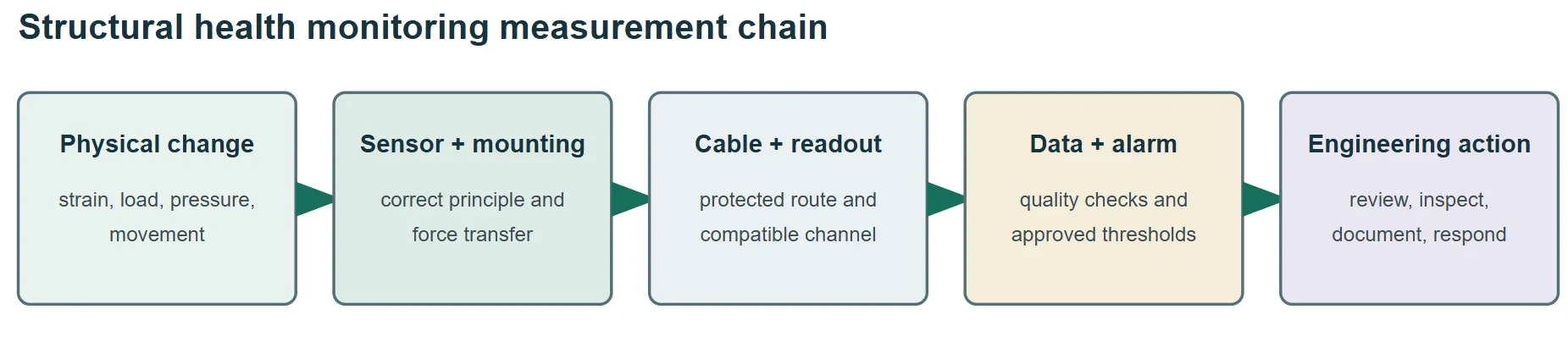
- Define the engineering question and the physical variable before selecting a sensor family.
- Confirm that range, resolution, repeatability, temperature behavior, and sampling rate support the alarm decision.
- Specify mounting, cable protection, grounding, surge protection, readout channels, communications, data storage, and maintenance access.
- Assign responsibility for baseline readings, threshold approval, alarm review, inspection, and data retention.
Selection criteria that belong in the quotation
| Decision point | What to confirm | Buyer consequence |
|---|---|---|
| Measured variable | Crack width, strain, load, pressure, joint movement, deep displacement, or global position | Prevents the team from buying a familiar sensor that answers the wrong structural question. |
| Range and alarm margin | Normal movement, credible extreme movement, installation offset, and alarm threshold | Avoids saturation while preserving enough measurement detail around the decision threshold. |
| Accuracy and stability | Calibration method, repeatability, temperature influence, drift, and verification interval | Defines whether a trend is structural movement or measurement uncertainty. |
| Environment and installation | Water, dust, corrosion, vibration, cable route, anchors, grout, access, and protection | Controls field survivability and the quality of force or movement transfer into the sensor. |
| Readout architecture | Manual readout, automatic logger, channel type, protocol, power, storage, and remote transmission | Prevents late integration changes and defines how quickly abnormal data reaches the reviewer. |
| Documentation and service | Model-specific datasheet, calibration coefficients, wiring, installation instructions, serial traceability, spares, and support | Reduces commissioning delay and leaves an auditable record for later maintenance. |
Eight movement-monitoring options and where they fit
The following eight options appear in Kingmach's displacement transducer range. They solve different movement questions within SHM, but they are not eight versions of one vibrating wire sensor. Compare the sensing principle, measurement path, installation method, output, and maintenance requirement before treating models as substitutes.
1. Smart crack gauge: JMDL-22XXAT
Use the JMDL-22XXAT Smart Crack Gauge when the engineering variable is the change in width across a crack, joint, or expansion joint. Standard range options allow the buyer to match expected movement rather than accept one generic travel. Mounting geometry must transfer the opening directly into the gauge while keeping anchors outside damaged or loose material. The zero reading should be recorded with temperature, installation condition, and the relevant drawing reference.
The Egongyan Rail-only Bridge project used smart crack gauges within a wider bridge monitoring system, showing why crack data should be interpreted with load, deflection, strain, and environmental measurements. A common mistake is choosing the smallest range for apparent precision without allowing for seasonal movement or installation offset. Another is mounting across an irregular crack without defining the movement axis. Ask for the exact range, accuracy, temperature option, cable length, mounting accessories, calibration record, and compatible readout. Define who may reset the zero and how any reset will be recorded in the monitoring history.
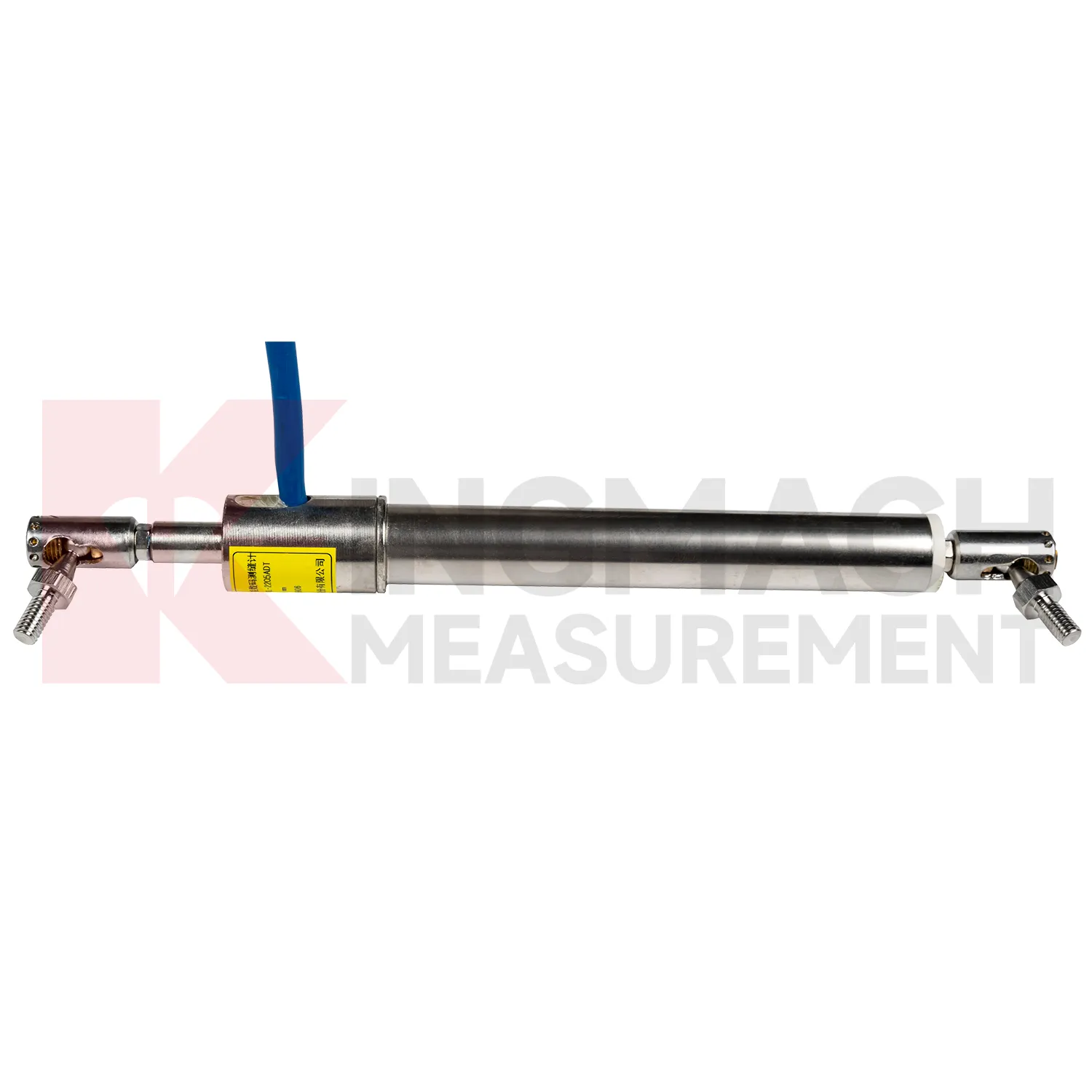
2. General-purpose displacement meter: JMDL-21XXAT
The JMDL-21XXAT General-Purpose Displacement Meter fits direct relative movement between two structural components when the measurement direction is clear. Typical tasks include expansion-joint movement, local support displacement, and relative movement across a defined interface. Its inductive frequency-modulation architecture and digital functions make it a different technology from a conventional vibrating wire sensor, even though frequency is involved in the internal measurement process.
Before ordering, draw the fixed point, moving point, expected direction, initial extension, and full movement envelope. Check whether rotation or transverse movement could side-load the rod or bracket. The usual error is treating a general-purpose gauge as a universal answer when the movement path is curved, too long, inaccessible, or referenced to unstable material. In those cases, a flexible, wire-rope, multipoint, bedrock, optical, or GNSS method may answer the question more reliably. Require a dimensioned mounting drawing and verify the installed initial position before the baseline reading is accepted.
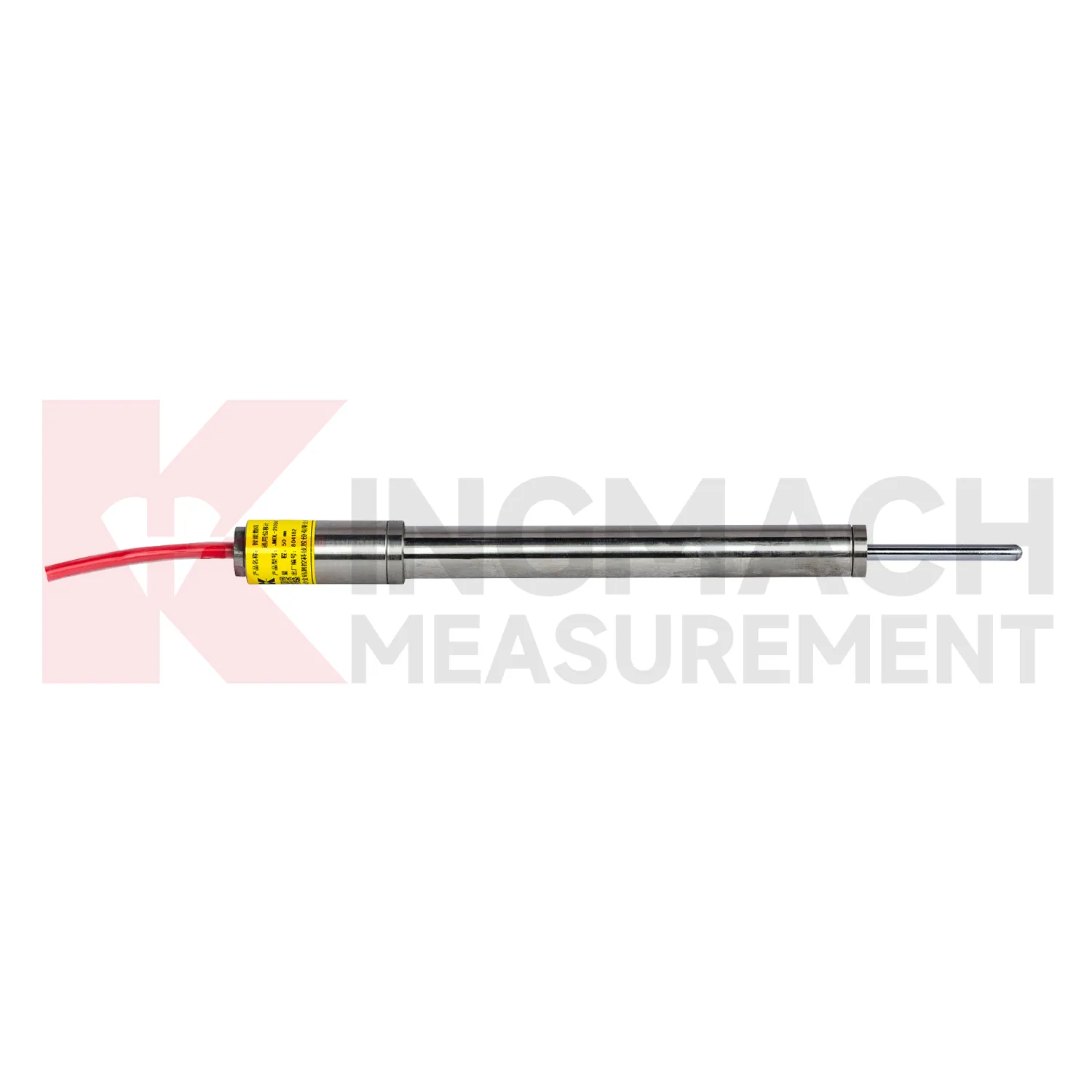
3. Differential displacement meter: JMDL-52XXADT
Choose the JMDL-52XXADT Differential Displacement Meter when the decision depends on movement difference between two points, such as relative movement across a joint, segment, or interface. Two coupled inductive coils respond in opposite directions as the rod moves. The differential calculation is intended to reduce common environmental influence, including temperature-related effects. This operating principle must not be described as vibrating wire.
The reference points are part of the measurement. If either anchor moves independently, the output may be correct for the installed geometry but wrong for the engineering interpretation. Include bracket stiffness, alignment, initial position, thermal movement, access, and cable protection in the installation drawing. A common error is using a differential gauge when the project actually needs absolute position or long travel. Confirm the reference frame and expected sign convention before defining alarms. During commissioning, apply a controlled movement in both directions and verify the sign, return, and channel mapping.
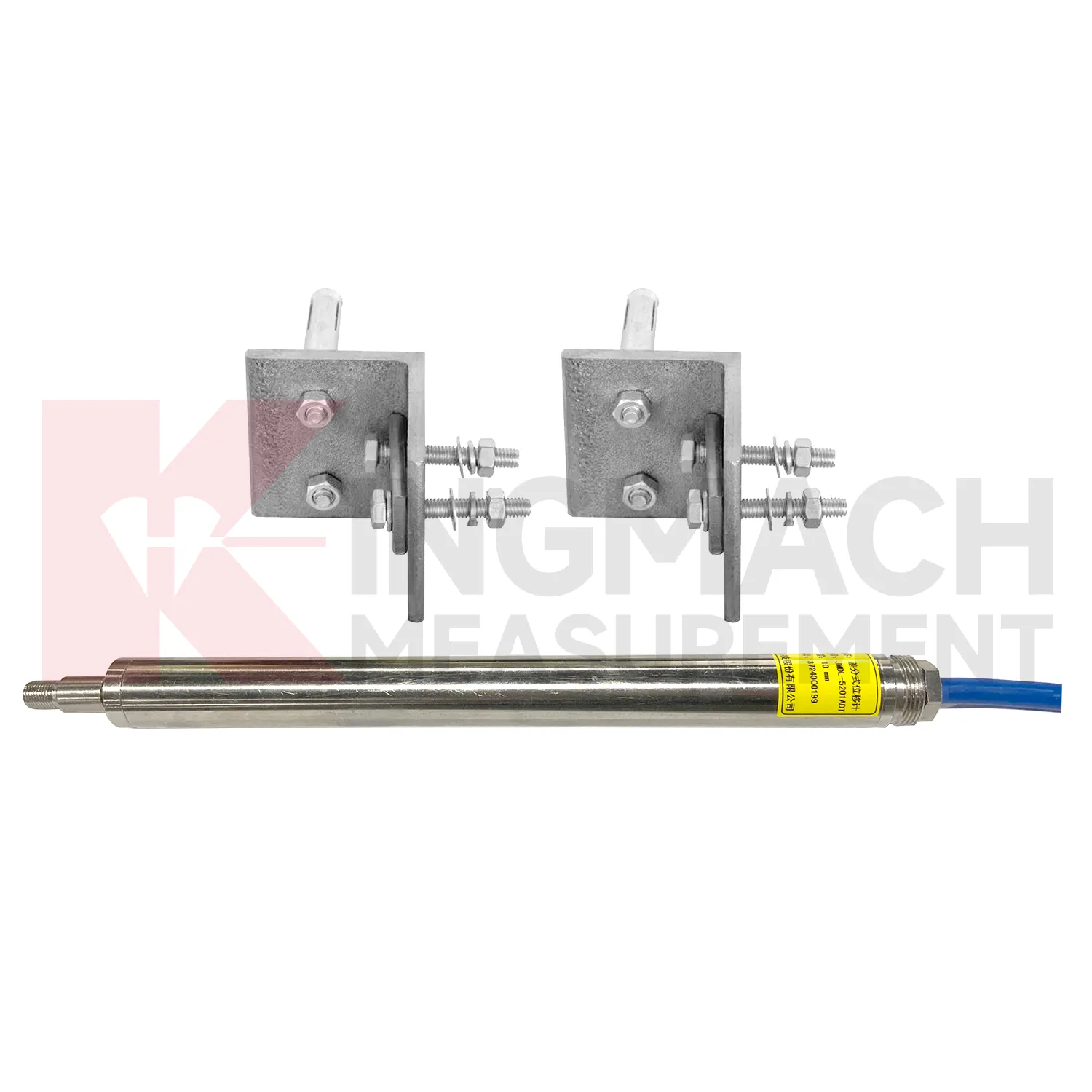
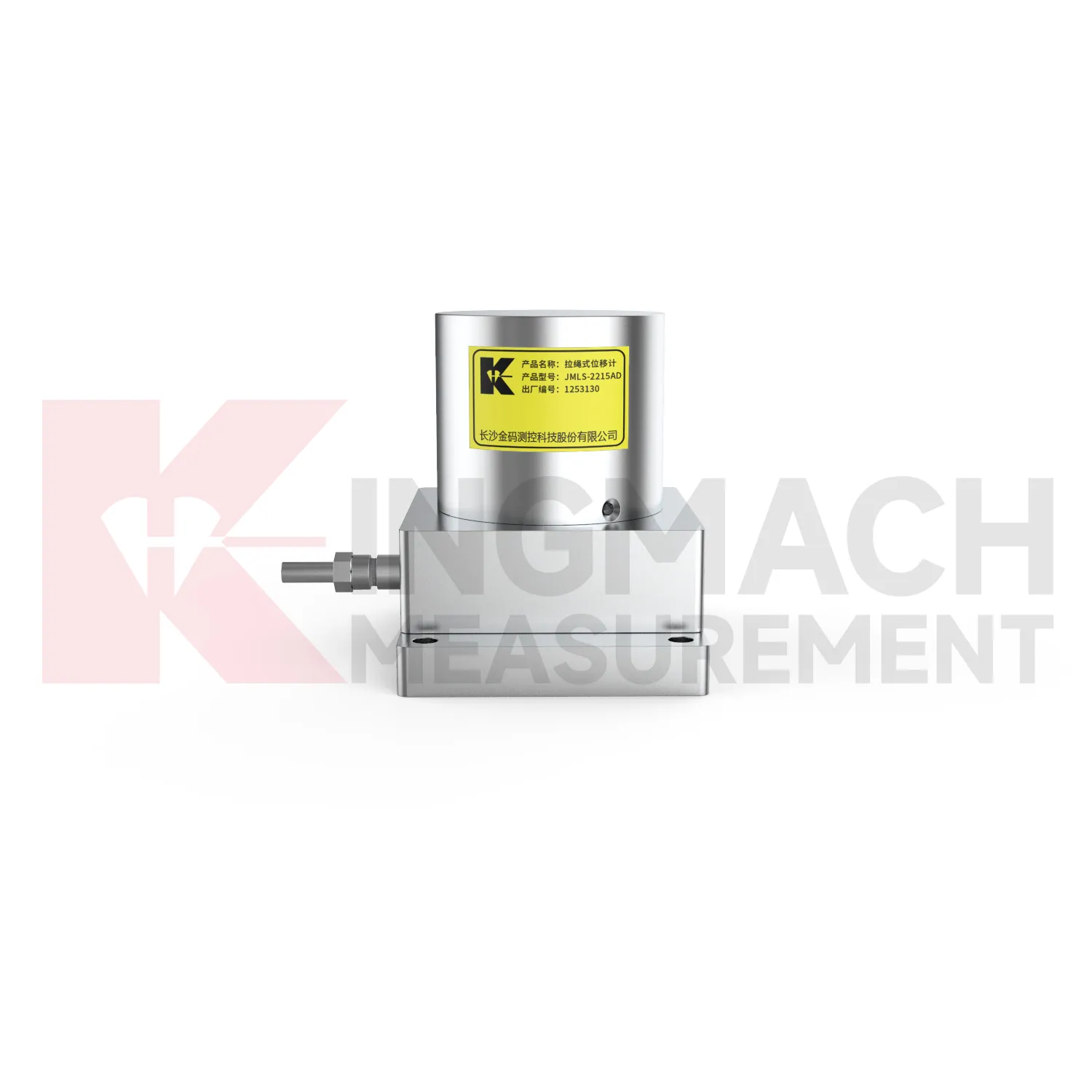
4. Wire-rope displacement sensor: JMLS-22XXADT
The JMLS-22XXADT Wire Rope Displacement Sensor converts cable extension or retraction through a spool and rotary sensing mechanism. It is useful when travel is larger or a rigid measuring rod cannot follow the available path. RS485 communication can simplify connection to a compatible acquisition system, but the mechanical cable route remains the dominant installation issue.
- Keep the cable aligned with the intended movement and protect it from abrasion, snagging, ice, debris, and accidental impact.
- Check retraction force, anchor strength, usable travel, bend geometry, enclosure sealing, protocol settings, and access for inspection.
- Do not use the full nominal travel as the design movement; reserve installation and extreme-event margin.
A frequent mistake is focusing on electronic resolution while ignoring cable mechanics. Poor alignment or an unprotected route can introduce friction, slack, or damage that no digital output can correct. Confirm the pull direction and retraction behavior through the full expected travel before the protective enclosure is closed.
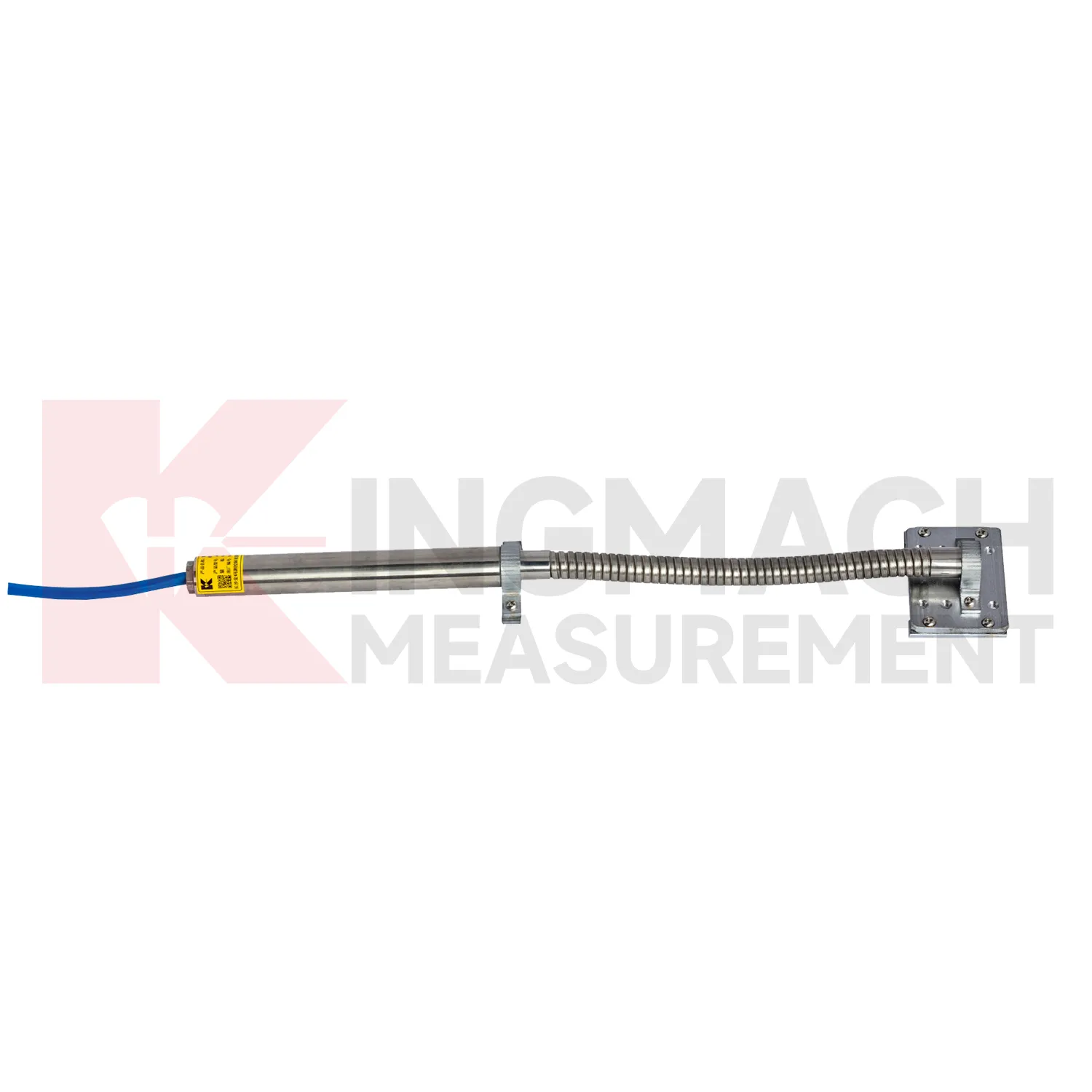
5. Flexible displacement meter: JMDL-24XXAT
Use the JMDL-24XXAT Flexible Displacement Meter when the sensing element must deform with geogrid or another embedded reinforcement rather than span a clean straight gap. The flexible extension follows material movement, while the internal inductive frequency-modulation sensing arrangement avoids sliding contact between the rod and coil. This makes the model relevant to reinforced soil, subgrade, slope, and foundation applications where a rigid surface gauge would distort the measurement path.
Installation planning should cover sensor orientation, attachment to the reinforcement, protection during fill placement, cable exit, compaction loads, initial reading, and the relationship between measured extension and engineering strain. The common error is treating the flexible rod as mechanically indestructible. Construction equipment, sharp bends, poor attachment, or uncontrolled fill placement can damage the assembly or decouple it from the material. Require an installation method statement and hold-point inspection before burial. Photograph the attachment and cable route so later data reviews can confirm the installed geometry.
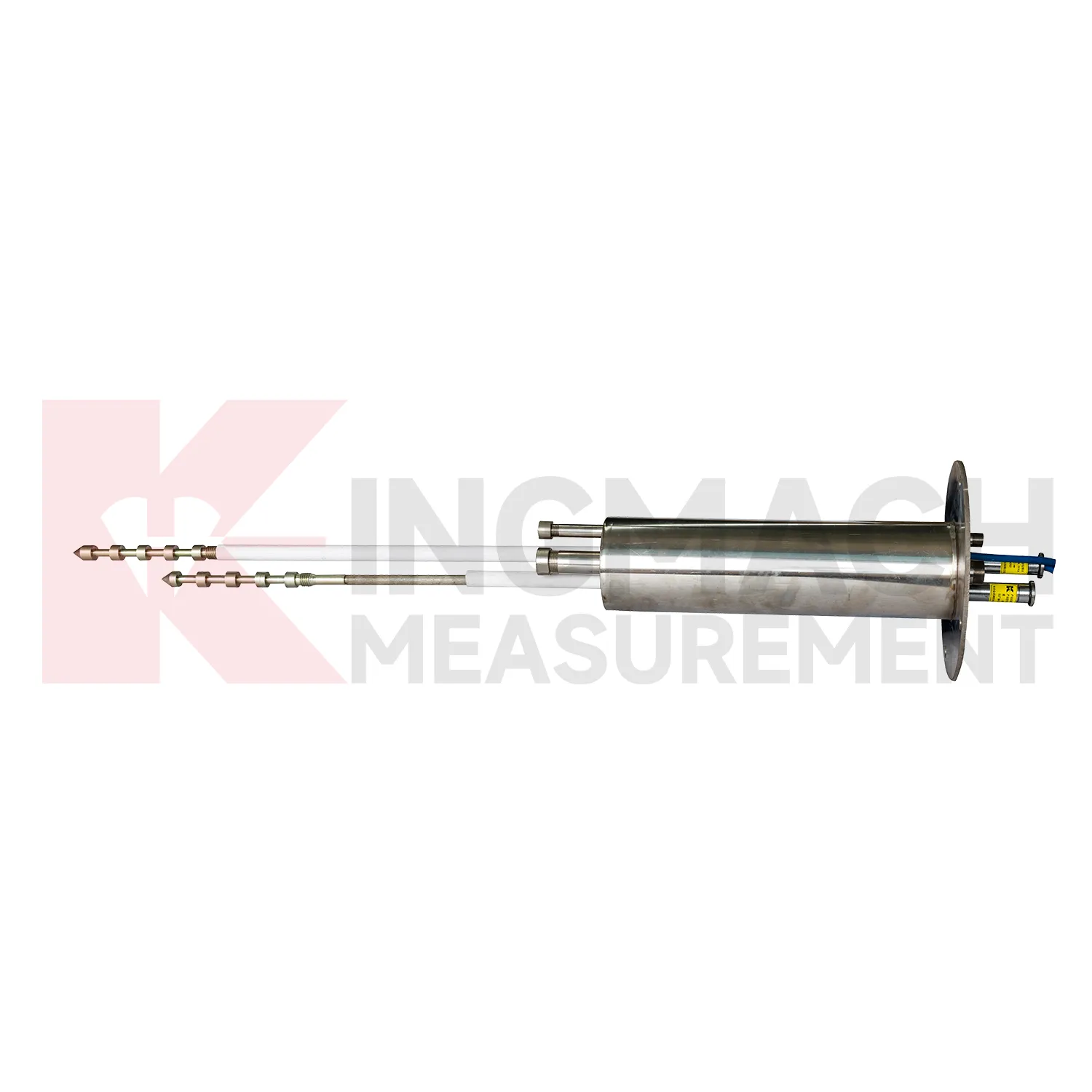
6. Multipoint displacement meter: JMDL-31XXAT
The JMDL-31XXAT Multipoint Displacement Meter separates movement at several depths in surrounding rock, slopes, foundation pits, or tunnel ground. Anchors installed at different depths connect through rods and protective tubes to individual displacement gauges. Comparing the points helps the engineer distinguish shallow deformation from deeper movement. This is more informative than one surface reading when the location of the active zone is uncertain.
The design team should specify borehole depth and diameter, three-to-five-point layout, anchor depths, geology, grout, rod lengths, head protection, cable routing, installation sequence, and baseline procedure. The common mistake is choosing equal point spacing without reference to strata, discontinuities, excavation stages, or the anticipated shear zone. Another risk is allowing grout or rod installation to create unintended coupling between points. Treat the borehole design and installation record as part of the instrument specification. Require the final depth schedule and installed point identification to match the logger channel map.
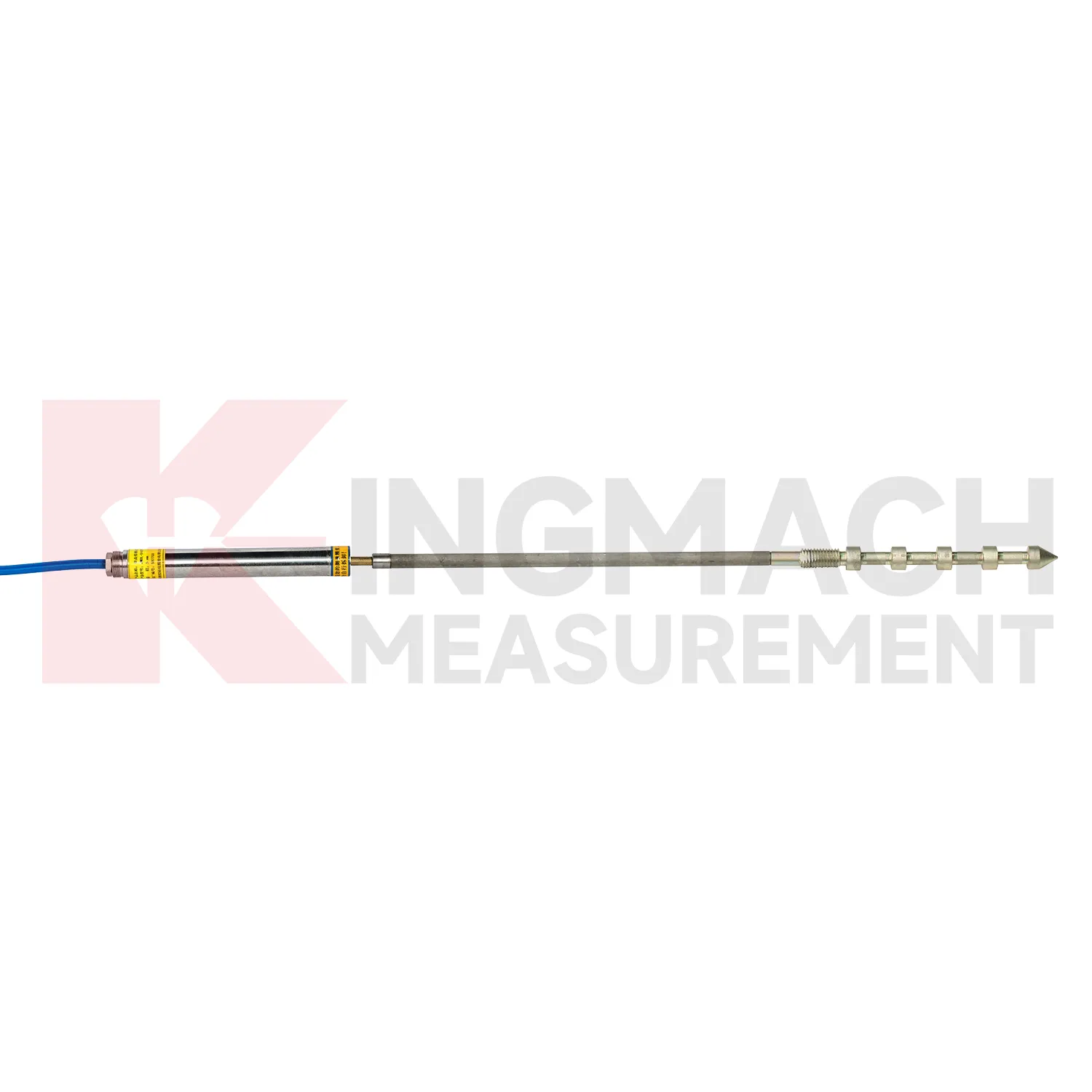
7. Single-point bedrock displacement meter: JMDL-32XXAT
The JMDL-32XXAT Single-Point Bedrock Displacement Meter measures movement between a surface or structural reference and one deep anchor. It suits tunnel rock deformation, dam foundation movement, slope movement, or foundation-pit applications when the engineer can identify a meaningful stable reference depth. The instrument combines a displacement sensor, rod, anchor, protective pipe, and head assembly, so borehole and anchor design directly affect the result.
Do not assume that deeper automatically means stable. Review geology, weathering, joints, groundwater, excavation influence, and the expected deformation zone before selecting anchor depth. A single point cannot show how movement is distributed above the anchor; use a multipoint system when depth profiling is required. The most common error is calling the deep anchor "bedrock" without documenting why it is an acceptable reference. Include borehole logs, grouting records, installed length, and baseline readings in acceptance documents. If reference stability remains uncertain, add an independent survey or another measurement point for verification.
8. GNSS displacement monitoring: JMBD-1050
Use the JMBD-1050 GNSS monitoring device for horizontal and vertical position changes across open-sky bridges, slopes, dams, mines, railways, or large structures. GNSS measures global position rather than local crack opening or rod travel. The system requires a suitable positioning architecture, mounting monument, power supply, communications, and data processing method. It can cover movement scales and distances that are impractical for a local contact sensor.
Before procurement, review satellite visibility, multipath risk, antenna location, reference or correction method, coordinate system, sampling interval, power autonomy, communications coverage, lightning protection, and how displacement vectors will be filtered and alarmed. The common error is installing GNSS near reflective structures or obstructed sky and expecting the same data quality as an open site. GNSS and local sensors often work together: GNSS tracks global movement, while crack gauges or deep instruments identify local deformation mechanisms. Include a sky-view and communications survey in the pre-installation acceptance plan.
Verified project evidence and what buyers should learn
Named project references are useful only when they clarify system scope. The three verified cases below show multi-sensor monitoring rather than a one-model success claim. Use them to frame the variables, acquisition architecture, and field risks that belong in a project RFQ.
| Verified project | Structure | Published monitoring scope | Buyer lesson |
|---|---|---|---|
| Egongyan Rail-only Bridge, 2019 | Bridge | Cable force, deflection, crack, strain, vibration, and environmental monitoring | Interpret local crack movement with load, response, and environmental data. |
| Yuping-Panzhou Expressway, 2023 | Tunnel/highway | Tunnel settlement, convergence, crack, strain, water level, and displacement monitoring | Assign the correct sensing principle and readout channel to each variable. |
| Jiwei Expressway slopes, 2024 | Slope | Deep displacement, rainfall, groundwater level, and local alarm functions | Combine deformation and triggering conditions instead of relying on one movement channel. |
Bridge: Egongyan Rail-only Bridge
The Egongyan Rail-only Bridge monitoring project in Chongqing combined smart crack gauges with cable-force, deflection, strain, vibration, and environmental instruments. For procurement, this means a crack gauge should not be asked to explain every structural response. Define how temperature, traffic-related behavior, cable force, deflection, and crack trends will be time-aligned and reviewed.
Tunnel: Yuping-Panzhou Expressway
The Yuping-Panzhou Expressway monitoring project in Guizhou covered tunnel settlement, convergence, cracks, and structural strain. The equipment mix included smart crack and laser displacement measurement, hydrostatic level sensors, and vibrating wire strain instruments. The lesson is precise labeling: a project may use vibrating wire sensors without every displacement channel being vibrating wire.
Slope: Jiwei Expressway in Shandong
The Jiwei Expressway slope monitoring project combined deep displacement, rainfall, groundwater level, and sound-and-light alarm functions. The 2024 project demonstrates why deformation data needs trigger and site-condition context. A slope RFQ should connect movement depth, rainfall interval, groundwater response, communications, power, alarm logic, and inspection responsibility.
Dam projects require the same system discipline
For a dam, define whether the decision concerns crack opening, joint movement, foundation deformation, pore pressure, water level, settlement, uplift, or global displacement. A dam monitoring system normally combines several sensor families and environmental measurements. Specify reference points, galleries or cable routes, waterproofing, surge protection, acquisition redundancy, inspection access, threshold ownership, and how readings will be compared with reservoir level and temperature.
Data logging, remote monitoring, and product video
Long-term SHM usually needs automatic acquisition, while manual readouts remain useful for commissioning, baseline checks, troubleshooting, and small projects. Match every channel to the sensing principle and output. Plan the readout or data logger, instrumentation cable, communications, and visualization software before the sensor order is released.
Alarm logic should separate data-quality checks from structural thresholds. Missing data, flat lines, sudden steps after maintenance, impossible temperature response, and disagreement between related channels may indicate a measurement problem. Structural alerts should use project-approved thresholds, persistence rules, escalation contacts, and an inspection response. Store raw readings, engineering values, calibration versions, maintenance events, and threshold changes so later reviewers can reconstruct the decision.
Product video: a genuine vibrating wire strain gauge
Watch the JMZX-215HAT/HB/HA Smart Vibrating Wire Strain Gauge product video
The video shows the JMZX-215HAT/HB/HA embedment vibrating wire strain gauge, a genuine vibrating wire instrument used for embedded strain monitoring. Use it to distinguish a vibrating wire sensing element from the inductive, wire-rope, or GNSS displacement technologies described above. For field preparation, pair the product review with the vibrating wire strain gauge installation guide.
Procurement and commercial terms
Compare configured system cost rather than sensor unit price. The quotation should separate sensors, cable lengths, mounting hardware, readout or logger channels, enclosures, power, communications, software, calibration documents, commissioning, training, spares, packaging, freight, and taxes. This reveals whether a lower sensor price creates higher integration, installation, or maintenance cost.
Current commercial terms for the referenced Kingmach displacement models use a one-piece minimum order quantity, negotiable pricing, T/T in advance, and shipment within 30 days after full payment. Treat these as quotation-stage terms, not a permanent promise. Ask the proforma invoice to confirm model suffix, quantity, unit and total price, Incoterm, packaging, payment milestone, lead time, shipping method, warranty, calibration scope, spare availability, and document language.
Lifecycle review should include installation labor, access restrictions, calibration checks, cable replacement, logger expansion, communications fees, software operation, planned inspections, and the cost of an emergency site visit. For buried or remote sensors, replacement access may outweigh the original purchase price. Agree on factory documentation and pre-shipment checks before payment so missing model, channel, cable, or protocol details do not surface during commissioning.
RFQ checklist for an SHM sensor package
Measurement and structure
- Structure type, monitoring location, drawings, photos, and the physical variable to be measured.
- Expected normal and extreme values, required resolution, accuracy basis, alarm threshold, sampling interval, and monitoring duration.
- Reference points, movement direction, installation offset, temperature range, and related channels needed for interpretation.
Site and installation
- Water, dust, corrosion, vibration, lightning, construction impact, borehole or grout requirements, access, and cable route.
- Mounting brackets, anchors, protective pipe, junction boxes, connectors, shielding, grounding, and surge protection.
- Installation method statement, baseline procedure, hold points, acceptance readings, and as-built records.
Data and commercial scope
- Manual or automatic readout, channel type, protocol, power, storage, transmission, software mapping, alarms, and user roles.
- Datasheet, calibration coefficients, serial traceability, wiring and installation instructions, applicable certificates, warranty, and support.
- Quantity, cable length, accessories, spares, packaging, Incoterm, payment terms, lead time, destination, and commissioning needs.
Common buying mistakes that increase monitoring risk
- Calling every frequency-output or digital movement sensor vibrating wire without confirming the sensing element and readout channel.
- Selecting range from normal movement only and leaving no allowance for installation offset, seasonal behavior, or a credible extreme event.
- Comparing accuracy values without checking whether they refer to full scale, reading, linearity, repeatability, or a complete installed system.
- Ordering sensors before finalizing anchors, boreholes, cable routes, protection, logger capacity, communications, power, and software tags.
- Using one local sensor to interpret a system-level mechanism that also depends on load, temperature, pressure, settlement, or global movement.
- Approving the lowest unit price without pricing installation, channel hardware, documentation, maintenance access, spares, and replacement risk.
Request a model and system review
Request a model and system review
Send Kingmach the structure type, measurement points, expected ranges, environmental conditions, installation drawings, sampling plan, readout architecture, alarm requirements, quantity, destination, and required delivery date. Ask the technical response to identify the sensing principle and explain why each proposed model fits the measurement question.
Request sensor selection supportFrequently asked questions
Are all frequency-output displacement sensors vibrating wire sensors?
No. A vibrating wire sensor measures the resonant frequency of a tensioned wire. Inductive frequency-modulation displacement meters also produce frequency-related signals, but they use an inductive coil and moving rod. Confirm the sensing principle, output, and compatible readout for every model.
Why are vibrating wire sensors used for long-term structural health monitoring?
They are well suited to slow, long-term measurements where stable frequency-based readings and long cable routes are useful. Field performance still depends on correct installation, sealing, cable protection, temperature interpretation, compatible readout electronics, calibration, and maintenance.
How should buyers choose the measurement range?
Combine normal movement, credible extreme movement, installation offset, temperature-related movement, and an engineering margin. The range must avoid saturation while preserving enough resolution and repeatability around the alarm threshold.
When is GNSS better than a local displacement sensor?
GNSS is useful for global horizontal and vertical position changes across open-sky slopes, bridges, dams, mines, and large structures. Local crack gauges, rods, or deep displacement instruments remain better for small relative movement or deformation at a specific interface or depth.
What should be included in a remote SHM acquisition package?
Specify sensor channels, compatible readout or logger, cable and junction protection, power, communications, storage, software mapping, data-quality checks, alarm logic, user roles, calibration records, commissioning, spares, and maintenance access.
What commercial details should a Kingmach RFQ confirm?
Confirm model suffixes, quantities, cable lengths, accessories, unit and total price, Incoterm, packaging, payment terms, shipment schedule, warranty, calibration documents, protocol settings, spare availability, commissioning, and destination requirements in the final quotation or proforma invoice.