
 EN
EN
 ar
ar bg
bg hr
hr cs
cs da
da nl
nl fi
fi fr
fr de
de el
el hi
hi it
it ko
ko no
no pl
pl pt
pt ro
ro ru
ru es
es sv
sv tl
tl iw
iw id
id lv
lv lt
lt sr
sr sk
sk sl
sl uk
uk vi
vi et
et hu
hu th
th tr
tr fa
fa ms
ms hy
hy ka
ka ur
ur bn
bn mn
mn ta
ta kk
kk uz
uz ku
ku
Real-Time Dam Safety Alerts with Differential Pressure Water Level Sensors
Dam owners need earlier visibility into level shifts, seepage pressure changes, and trend breaks that appear before an operating issue turns into a safety event. Differential pressure water level sensors are useful because they keep tracking those changes at embedded, wet, and hard-to-access monitoring points.
In a workable alert workflow, the sensor is only the first link. The reading has to stay stable in field conditions, move cleanly into the acquisition layer, and reach software that can compare it with thresholds, rate-of-change rules, and nearby instruments. That is what turns periodic checking into real-time dam safety alerts.
For buyer-side evaluation, the real question is not whether a sensor can read water level in isolation. The real question is whether it can support dependable alerts across embedded pipes, drainage points, unattended stations, and long service intervals without creating extra uncertainty for the monitoring team.
For dam operators, the most useful alert is rarely a single high reading. It is a level or seepage signal that breaks from its normal relationship with reservoir operation, rainfall, drainage, or structural movement.
Why water level signals matter in dam safety programs
A dam monitoring plan usually tracks more than reservoir elevation. Operators also watch seepage pressure, phreatic line movement, drainage behavior, downstream level, and the way those readings move alongside displacement, crack width, or stress data. A single value may look normal while its trend against rainfall, discharge, or uplift pressure tells a different story.
That is why alert logic needs context. A rising reading inside a foundation water level tube may point to a seepage path becoming more active. A change at a pressure relief pipe can suggest drainage conditions are shifting. A reservoir level rise during normal operation may be acceptable, but the same rise paired with unusual internal pressure movement deserves attention.
A dependable dam monitoring program treats water level, seepage, deformation, and environmental monitoring as linked indicators. That matches how experienced operators read risk in practice: the warning value comes from correlation, not from one instrument working alone.
How differential pressure sensors turn water head into usable data
Differential pressure water level instruments infer liquid height from pressure. In field terms, the sensor converts the water head acting on the measuring element into a digital level value. When the installation uses a vented cable connected to atmosphere, the reading can reduce barometric interference and respond faster to actual water level movement.
This operating logic fits dam work well because many monitoring points are narrow, embedded, wet, and hard to access. Instead of relying on frequent manual sounding, the instrument can remain in place and report from inside a water level pipe, at a drainage outlet, or within a hydrological observation point.
For a wired monitoring architecture, Kingmach's JMYC-67XXAD series is positioned for deep seepage pressure, reservoir and dam water level observation, groundwater monitoring, and embedded pipe installation. Its RS485 output, IP68 protection, 0.1 mm resolution, and 0.2% FS accuracy are the kinds of details buyers can use when screening fit with an existing acquisition backbone.
What real-time dam alerts actually depend on
An alert is not created by the sensor alone. It depends on threshold design, acquisition reliability, communication stability, and comparison with nearby instruments. In practice, teams often use three layers of rules: absolute alarm thresholds, rate-of-change thresholds, and correlation checks against rainfall, reservoir operation, seepage, or deformation data.
For example, a reservoir level increase during a planned operating window may be acceptable. A fast internal water level rise in an embedded observation tube, especially if paired with abnormal seepage flow or uplift pressure, calls for a different response. Better rules reduce the chance that crews waste time on false alarms while still missing a developing pattern.
That is also where the rest of the system matters. Kingmach's dam-oriented product set includes the JMZX-XXGH acquisition module and a monitoring software platform, which is relevant because alert quality depends on how the sensor, logger, transmission layer, and visualization stack behave together under continuous use.
Platform views for review and alarm control
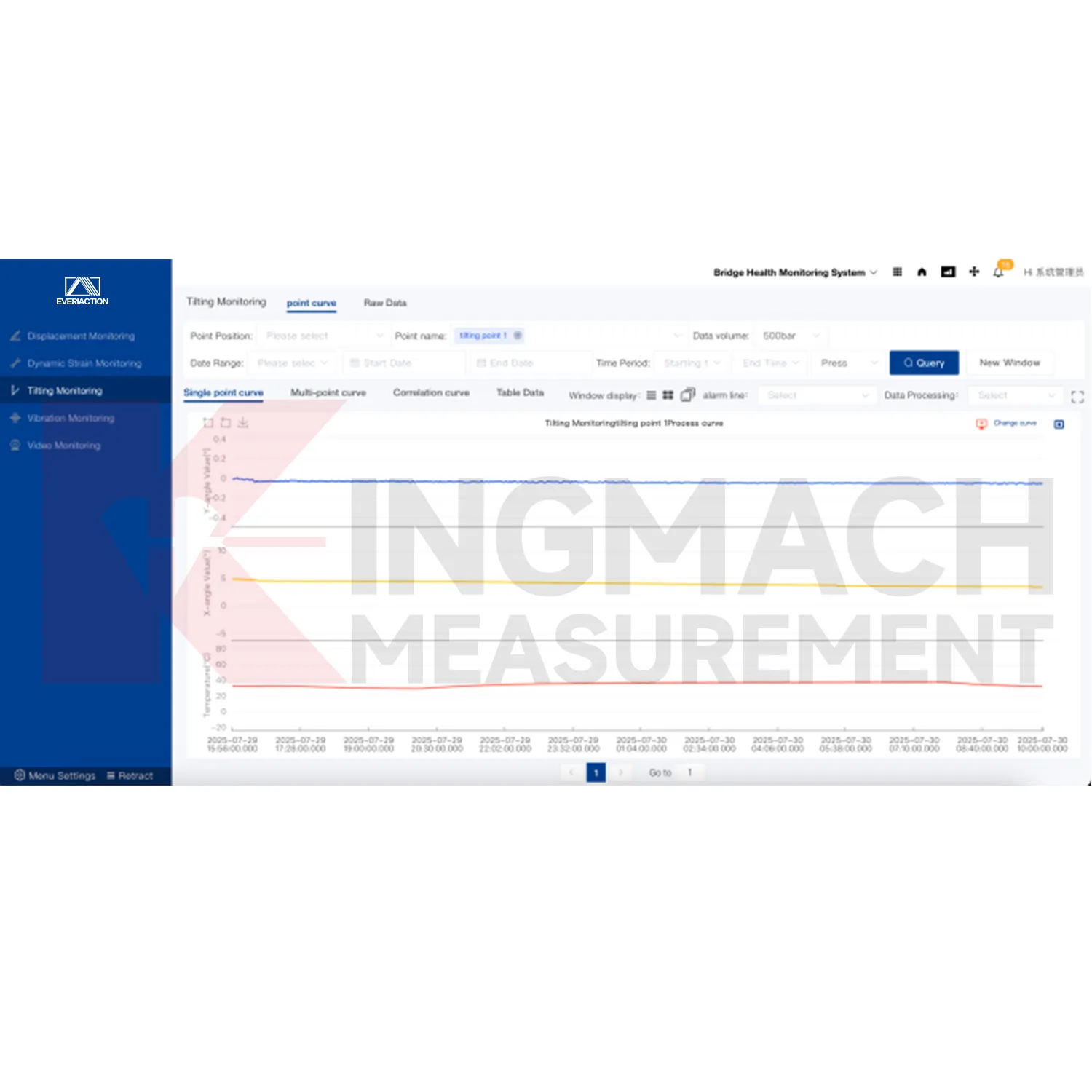
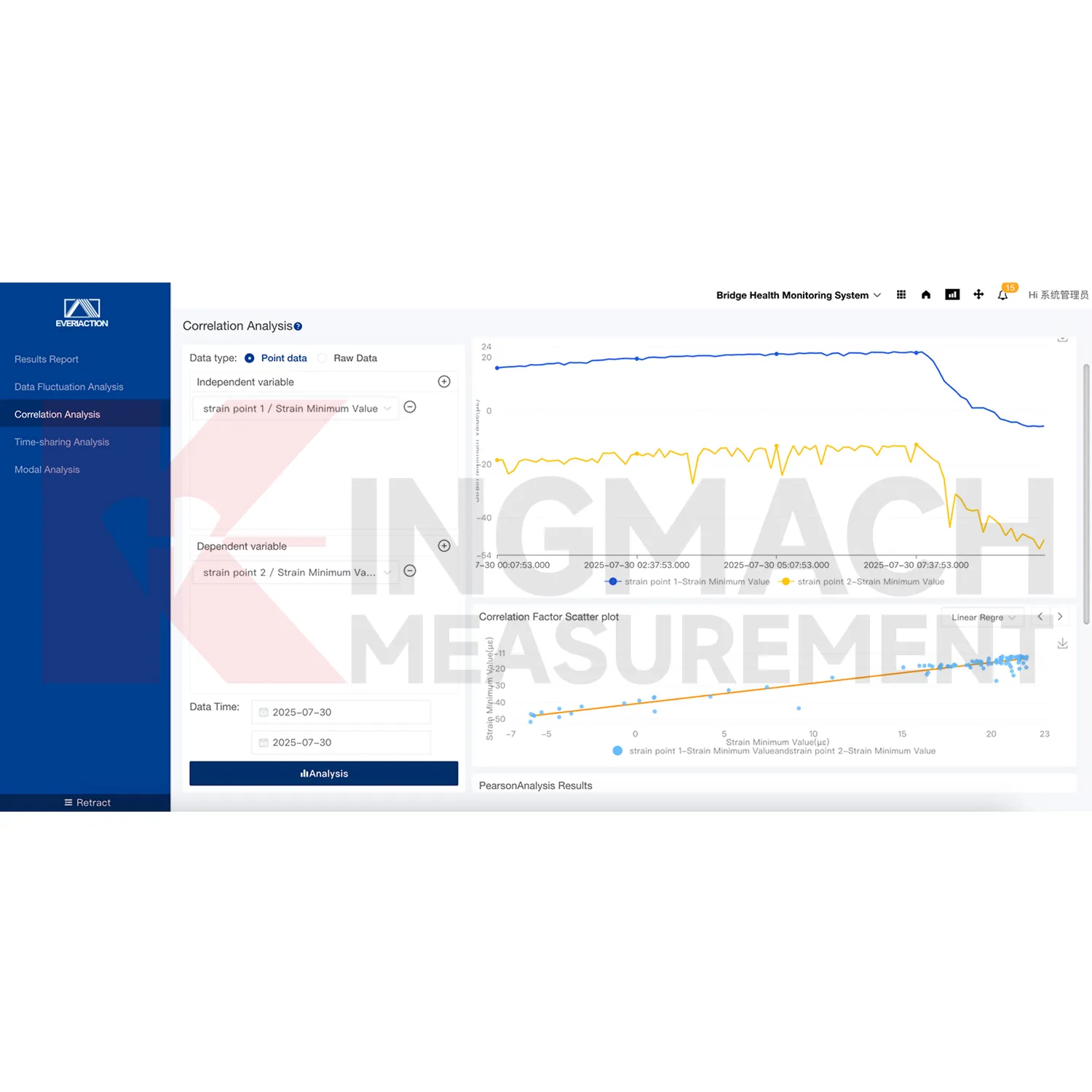
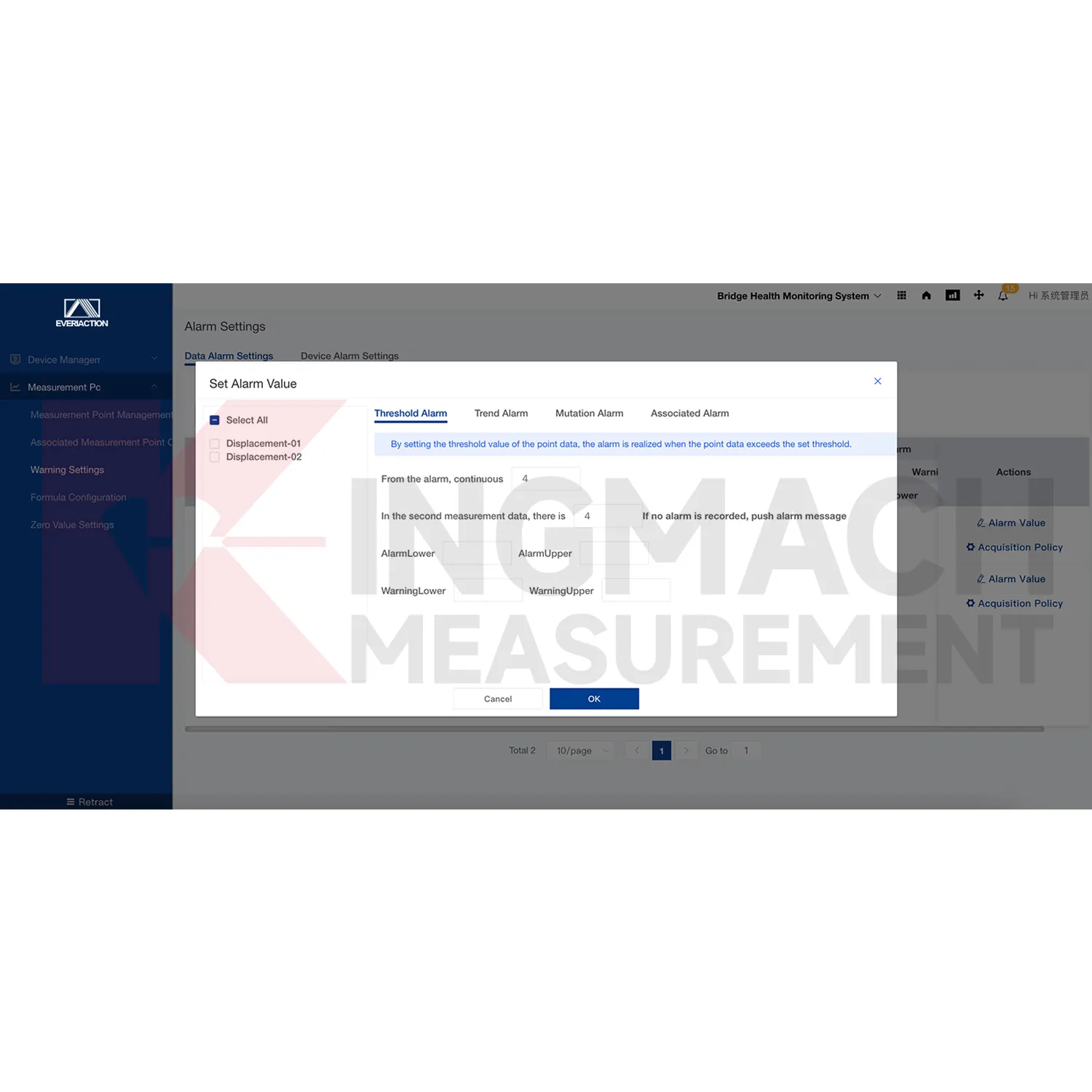
Where differential pressure water level meters fit in a dam instrument mix
Differential pressure water level devices are strongest when the task is continuous level observation in pipes, hydrological points, or seepage-related monitoring locations where stable digital output matters. They are usually part of a broader instrument mix rather than a stand-alone answer.
A practical dam setup may combine a differential pressure water level meter for water head movement, a vibrating wire piezometer for pore pressure behavior, displacement sensors for structural movement, and a software layer that ties the data to warning thresholds. If the site has remote points without convenient power or cabling, an integrated wireless model can reduce field work and simplify deployment.
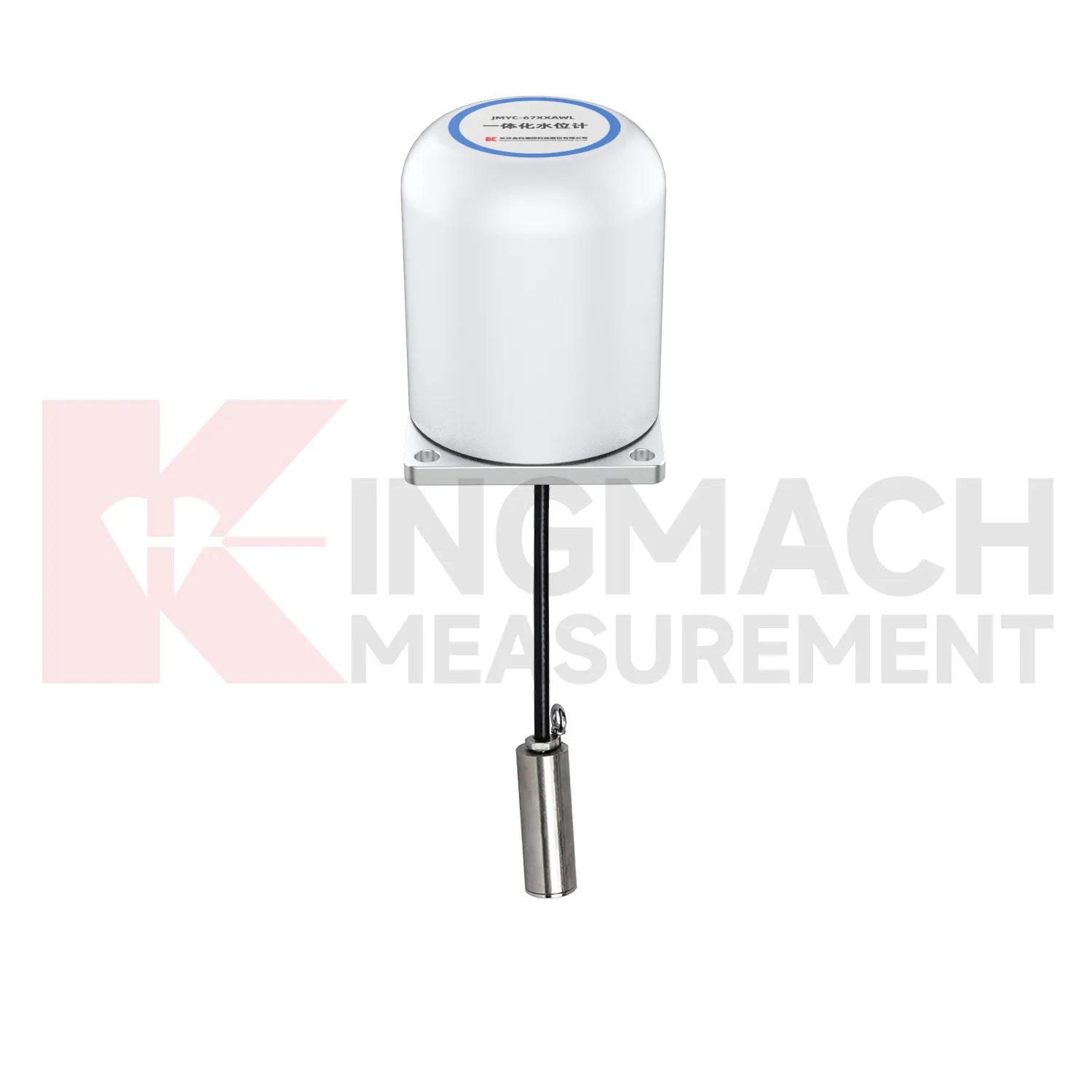
For unattended reservoir or river points, the JMYC-67XXAWL integrated model combines a 4G DTU and internal battery in one package. That can make maintenance planning cleaner when a project wants fewer separate field components.
How to compare wired and integrated differential pressure models
The fastest way to compare options is to look past the headline range and match each model to the monitoring architecture. A wired RS485 instrument can be the better fit when the dam already has cabinets, logger capacity, and a stable communication backbone. An integrated 4G unit can shorten installation time at distributed points where trenching and power routing would slow the project.
For procurement review, the comparison should stay tied to operating method. In the Kingmach range, the JMYC-67XXAD line suits wired RS485 integration and fine-resolution monitoring, while the JMYC-67XXAWL line shifts the discussion toward built-in 4G communication, internal lithium power, and battery life that changes with the sampling interval. Those differences affect maintenance planning, spare strategy, and alarm frequency design.
| Model | Best fit | Signal path | Useful published specs |
|---|---|---|---|
| JMYC-67XXAD | Wired dam, reservoir, and groundwater points tied to a central acquisition layer | RS485 | 10 m / 20 m / 30 m models, 0.1 mm resolution, 0.2% FS accuracy, IP68, DC 9-24 V |
| JMYC-67XXAWL | Remote or unattended field points where separate DTU and power gear add field burden | Built-in 4G | 10 m / 20 m / 30 m models, 1 mm resolution, +/-0.1% FS accuracy, IP68, internal 3.6 V / 38 Ah battery |
Installation details that protect alert quality
Many bad alerts are installation problems disguised as sensor problems. If the water level pipe is blocked, the vent path is compromised, cable handling is poor, or the reference condition is unstable, the data stream will drift before anyone suspects the mounting method.
For buyer-side acceptance, ask the supplier to define pipe size compatibility, suspension method, vented cable protection, waterproof handling at connectors, logger addressing, and commissioning checks for zero drift, repeatability, and communications. That keeps handover tied to field behavior instead of a paper specification alone.
When the monitoring point is remote, the commissioning plan should also define sampling interval, alert frequency, battery replacement planning, and how the platform flags missing data versus abnormal data. Those are different events, and mixing them in the software layer creates confusion during real incidents.
How engineers read abnormal trends before they become emergencies
A useful alert system does not wait for an extreme value. It watches for changes in slope, duration, and agreement between related channels. In dam work, that often means checking whether internal water level movement is tracking reservoir operation normally or separating from it.
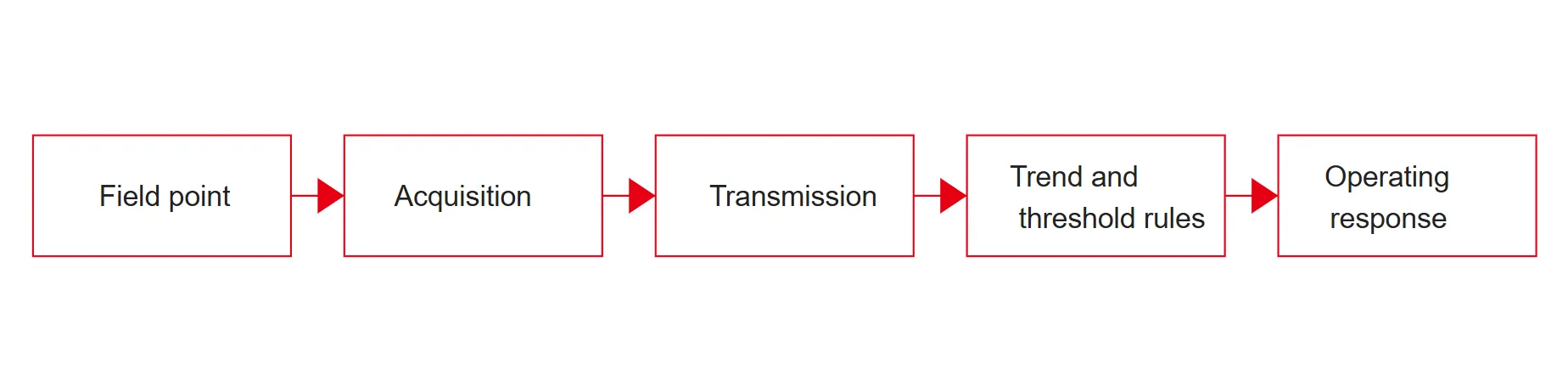
Figure: sensors provide an input to the alert chain; commissioning and operating rules determine whether that input becomes a usable alert.
Three patterns usually deserve close review: first, a persistent rise in internal level or seepage pressure without an obvious reservoir operating cause; second, faster than normal recovery or drawdown behavior after rainfall or discharge changes; third, disagreement between nearby water level, seepage, and deformation channels that used to move together. Any of these can point to drainage changes, local blockage, or a developing seepage path that needs field verification.
When buyers review suppliers, it helps to look beyond the sensor datasheet and examine the whole monitoring chain: storage, trend review, threshold settings, inspection records, and the supplier's ability to support integrated field deployment. That broader view is usually where long-term alert reliability is decided.
Procurement checks before you release an RFQ
For dam projects, the better RFQ is built around monitoring duty rather than a generic water level request. State whether the point is inside an embedded pipe, pressure relief outlet, groundwater observation point, or open hydrological location. Add expected range, communication method, power constraints, logging interval, alarm latency, maintenance access, and required integration with existing software or loggers.
Then ask the supplier to map those conditions to instrument type, field accessories, and acceptance tests. A serious review should cover resolution, accuracy, waterproof grade, operating temperature, overload tolerance, communication format, and the plan for long-term servicing. It should also define which readings are used for alarms and which are retained mainly for trend interpretation.
If you are comparing Kingmach equipment, it makes sense to review the JMYC-67 series together with dam-related companion hardware such as the piezometer, acquisition module, and monitoring platform, then take the technical and commercial discussion through the quotation channel. That keeps the RFQ tied to the full alert chain instead of a single component.
| RFQ item | Why it matters |
|---|---|
| Monitoring point type | Confirms whether the supplier is matching pipe installation, seepage pressure, reservoir level, or remote hydrology duty |
| Signal and power plan | Determines whether RS485 or built-in 4G is the cleaner fit and whether battery planning is realistic |
| Alarm logic | Prevents a handover where raw readings exist but no usable threshold structure has been agreed |
| Maintenance access | Shapes cable routing, enclosure needs, battery interval, and spare planning |
| Platform integration | Reduces the risk of stranded data that never reaches the warning dashboard |
Plan the alert chain before the first sensor is installed
If your dam or reservoir project needs differential pressure water level monitoring, start with the monitoring point layout, data path, and alarm rules together. That makes it easier to compare JMYC-67 series instruments, related piezometer and acquisition hardware, and platform integration requirements in one conversation.
FAQ
Can a differential pressure water level sensor be used for both reservoir level and internal dam monitoring?
Yes, if the installation method and range match the monitoring point. Kingmach's published materials describe use in reservoir and dam water level observation, groundwater monitoring, and embedded pipe installations. Buyers should still separate open water observation from internal seepage or pore pressure tasks when they define thresholds.
What is the difference between a wired model and an integrated wireless model?
A wired model suits RS485-based collection. The integrated JMYC-67XXAWL adds 4G communication and internal battery power, which can reduce field hardware at remote points. The better fit depends on the site's power, communications, and maintenance conditions.
Are millimeter-level readings enough to create alarms automatically?
Resolution alone is not enough. Alert quality also depends on installation quality, threshold design, sampling interval, missing-data handling, and comparison with nearby channels such as seepage, rainfall, or displacement. A fine-resolution sensor still needs a disciplined rule set.
How often should a dam water level monitoring point report data?
That depends on risk level, expected rate of change, and power strategy. In the integrated JMYC-67XXAWL product data, battery life changes with the sampling interval. Faster reporting improves response time but increases communication and power demand, so the interval should be set against the site's warning objectives.
What should buyers ask for during commissioning?
Ask for installation records, communication checks, baseline readings, repeatability checks, threshold setup notes, and a clear distinction between sensor alarms, communication loss, and maintenance reminders. Those items make later alert reviews much more reliable.