
 EN
EN
 ar
ar bg
bg hr
hr cs
cs da
da nl
nl fi
fi fr
fr de
de el
el hi
hi it
it ko
ko no
no pl
pl pt
pt ro
ro ru
ru es
es sv
sv tl
tl iw
iw id
id lv
lv lt
lt sr
sr sk
sk sl
sl uk
uk vi
vi et
et hu
hu th
th tr
tr fa
fa ms
ms hy
hy ka
ka ur
ur bn
bn mn
mn ta
ta kk
kk uz
uz ku
ku
Differential Pressure Water Level Sensors for Dam Safety: 7 Engineering Advantages Explained
Differential pressure water level sensors are used in dam safety monitoring because they do more than measure level at one moment. They provide continuous water pressure and water level information from embedded tubes, drainage points, and seepage-related locations where manual readings are slow, inconsistent, or too far apart to support a fast response. In a dam program, that matters because many problems develop as trends first and only become obvious later.
A dam does not behave as a single number. Reservoir level, seepage pressure, drainage flow, deformation, rainfall, and downstream conditions all influence how a monitoring team interprets risk. A differential pressure sensor becomes valuable when its output can be logged, trended, compared with nearby instruments, and tied to alarm thresholds that reflect real operating behavior rather than a generic high-or-low reading.
Advantage 1: Better Fit for Embedded Pipes, Drainage Points, and Narrow Monitoring Locations
Many dam monitoring points are not convenient open-water measurement positions. They sit inside embedded water level tubes, pressure relief outlets, seepage boreholes, or narrow field installations where repeated manual measurement adds labor and variation. Differential pressure water level sensors fit these locations well because they can remain in place and keep reporting from the same measuring position.
That installation fit is not a small detail. It improves consistency. When the sensor stays fixed, the team gets a cleaner history of how the point behaves through rainfall events, reservoir fluctuations, and operating cycles. The result is better trend continuity than a workflow built around occasional manual checks taken under changing field conditions.
In the Kingmach JMYC-67XXAD range, the product positioning around embedded tubes, dam water level observation, and seepage-related points supports that field use. For a monitoring buyer, this means the sensor is being considered for the kind of installation geometry common in dam programs, not only for generic tank or industrial liquid level duty.
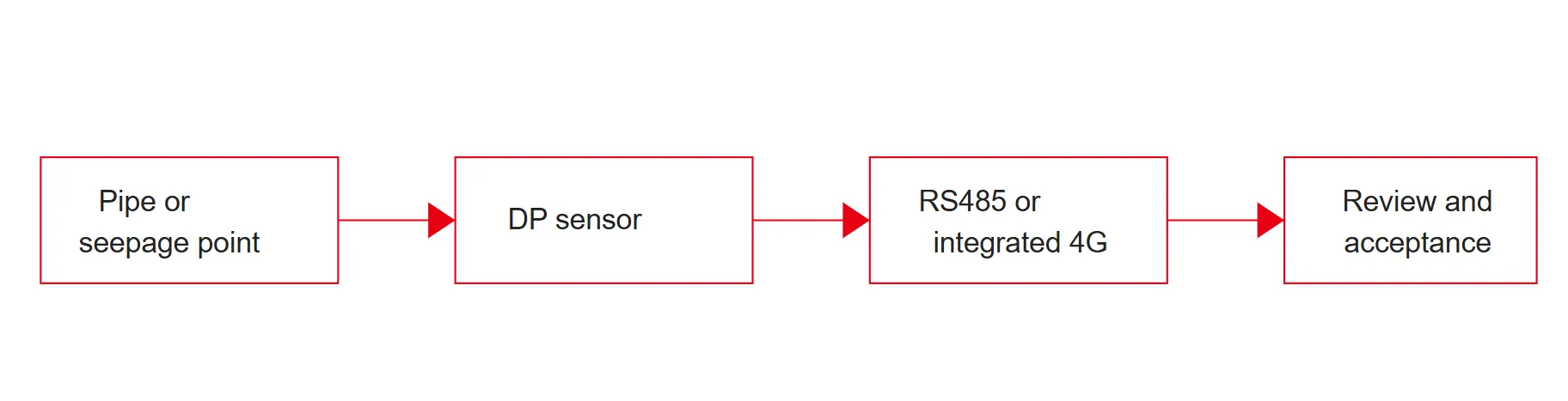
Figure: an engineering advantage is realized only when the point, sensor, data path, and review process are specified together.
Advantage 2: Stable Trend Data for Seepage Pressure and Water Level Interpretation
Differential pressure sensors help dam teams read trends rather than isolated values. That is important because seepage and internal water behavior often become meaningful through persistence and relationship, not through one dramatic point. A modest rise can matter if it continues for days, responds too slowly after reservoir drawdown, or stops matching nearby drainage behavior.
Stable trend data supports better interpretation in three common situations. First, when a reservoir level change should produce a predictable internal response but does not. Second, when a seepage-related monitoring point recovers too slowly after rainfall or discharge conditions change. Third, when one point begins to diverge from nearby points that usually move together. These are the kinds of patterns that lead to closer inspection before a larger problem develops.
Millimeter-level water level resolution in the JMYC-67XXAD line gives the site a finer trend record to work with, while the 0.2 percent full-scale accuracy listed for that model helps frame whether the instrument is suitable for the monitoring duty. The point is not to quote the numbers for their own sake. The point is that fine resolution and stable output improve how small but persistent changes are reviewed over time.
Advantage 3: Direct Support for Real-Time Dam Safety Alerts and Warning Rules
A sensor becomes much more useful when it supports warning logic instead of only collecting readings. Dam alert workflows usually rely on three rule families: absolute thresholds, rate-of-change thresholds, and cross-checks against related monitoring channels. Differential pressure water level sensors help because their output can be brought directly into this rule structure through wired or remote data collection.
That matters operationally. A reservoir level rise during a normal control window may not require action. A fast internal rise in a seepage-related point, especially when it does not match expected drainage behavior, may deserve field verification. A useful warning system needs the sensor data in time, in consistent format, and in a platform where the rule can trigger without waiting for a manual data handoff.
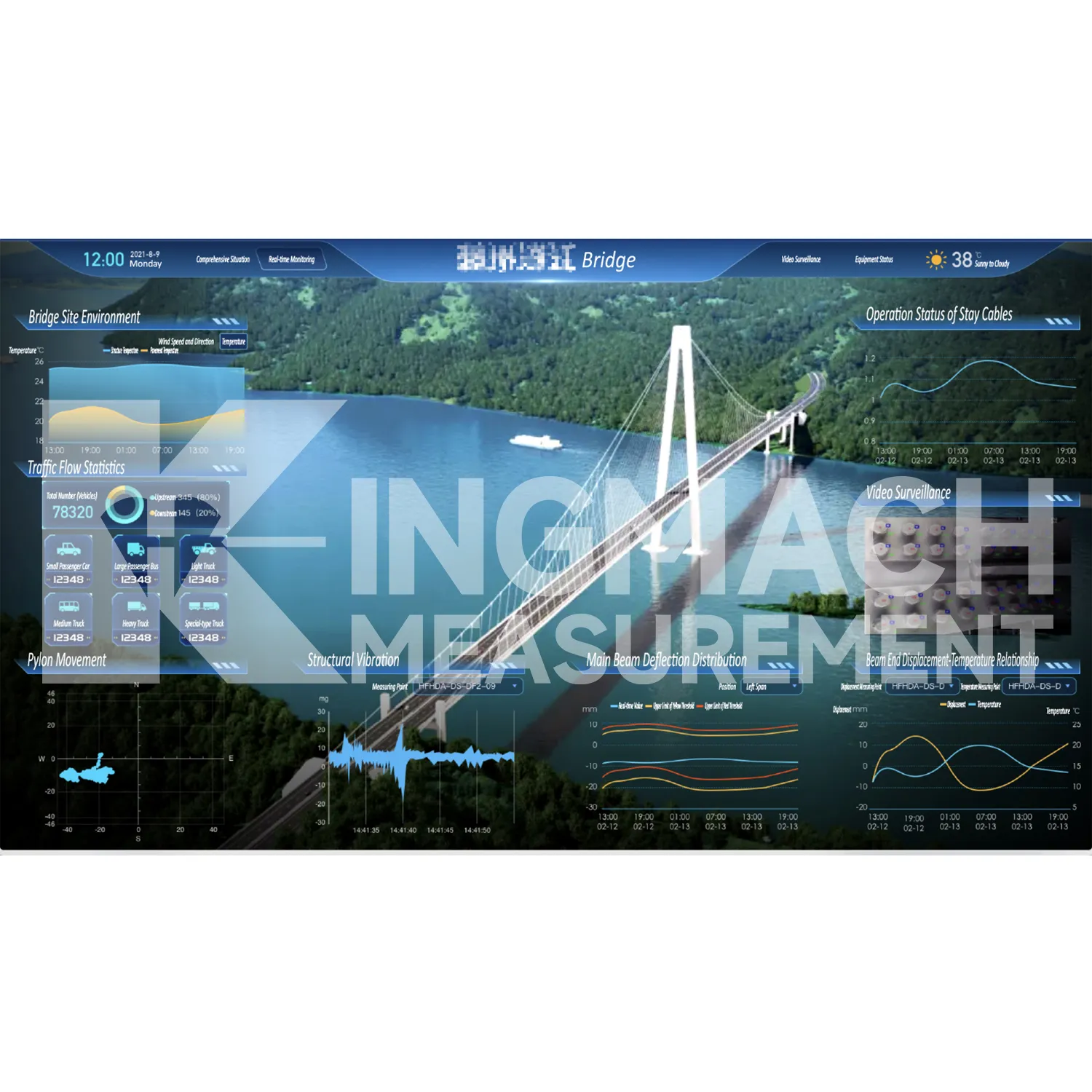
Kingmach's dam-related product stack includes the JMZX-XXGH acquisition module and a monitoring platform that supports centralized data handling and alarm rule configuration. For a buyer, that means the water level sensor can be reviewed as part of a complete data path: sensing, acquisition, transmission, storage, trend review, and alert delivery.
Advantage 4: Flexible Deployment in Wired RS485 and Remote 4G Monitoring Architectures
Dam sites do not all have the same communication conditions. Some already have cabinets, power, and a central logger network. Others need remote points where running cable would raise field cost or slow deployment. Differential pressure water level sensors can work in both arrangements when the model matches the communication plan.
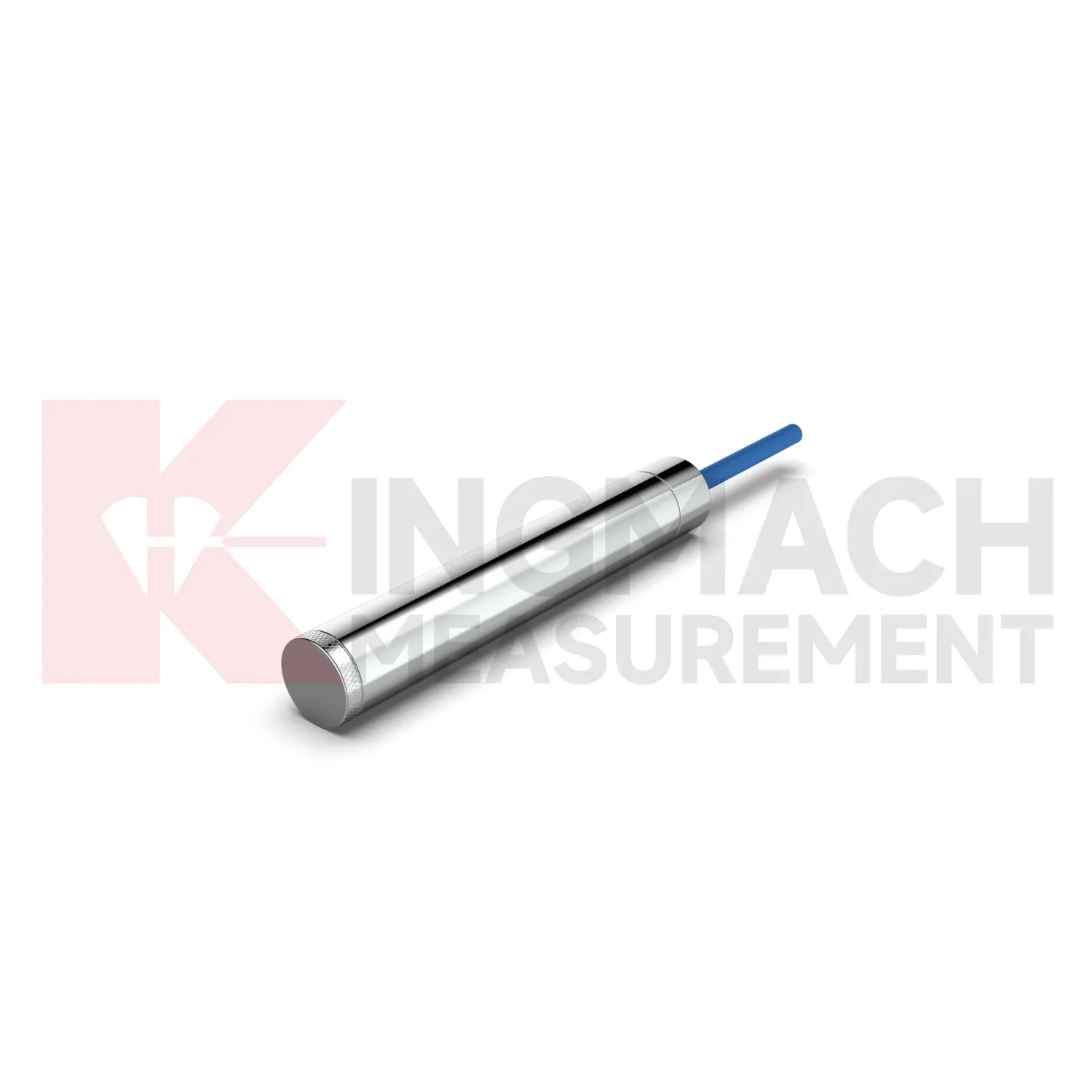
In the JMYC-67 family, the JMYC-67XXAD fits a wired RS485 architecture, which is useful when the site already has a stable acquisition backbone and wants direct integration into a central module. The JMYC-67XXAWL takes a different route by combining a built-in 4G DTU with internal battery power. That reduces separate field communication hardware and can help at unattended or widely distributed monitoring points.
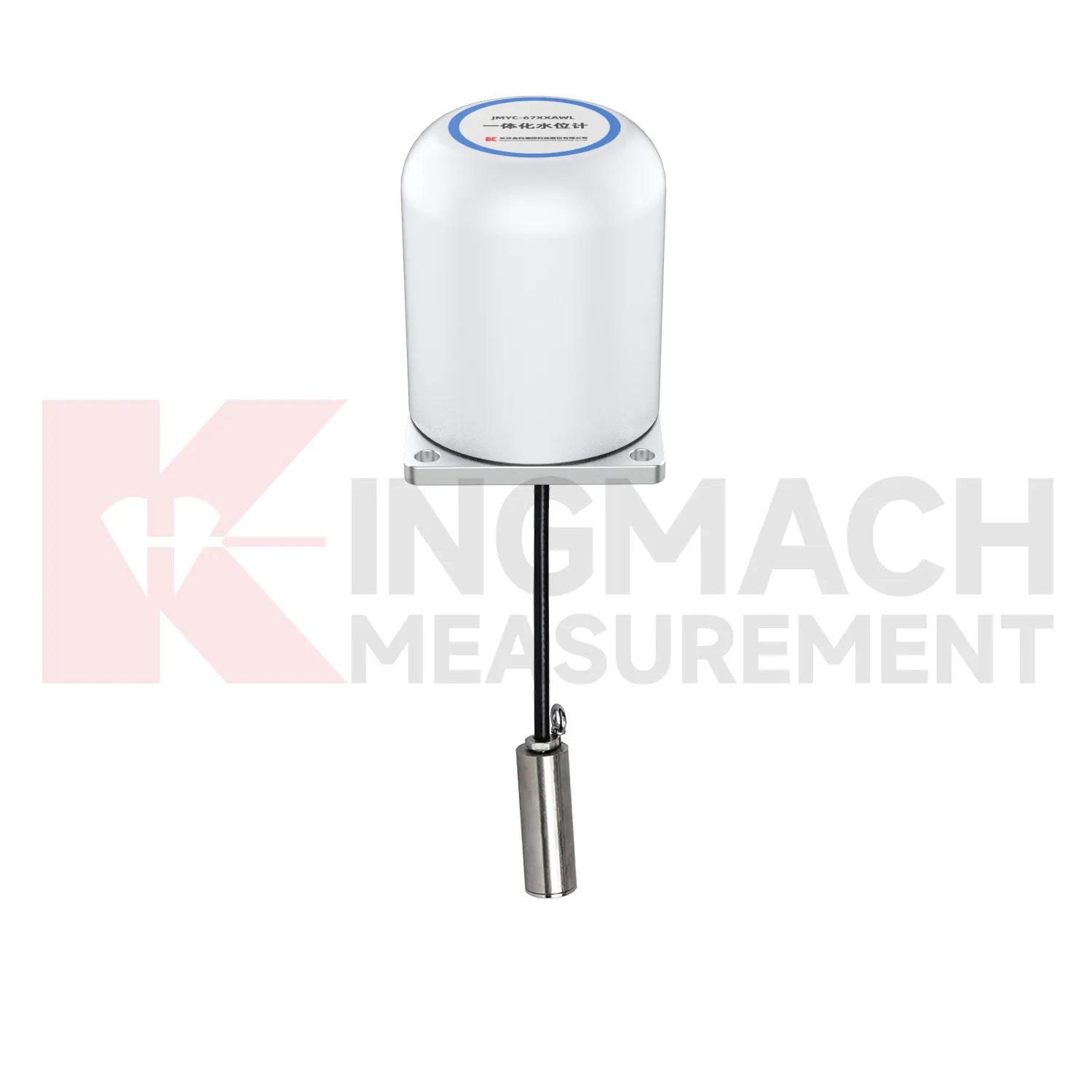
This difference affects more than installation time. It changes maintenance planning, spare strategy, communication fault handling, and how often the site can realistically sample without creating power burden. A buyer comparing these options should review the communication route and power route before comparing price, because those two decisions shape the lifetime operating load of the monitoring point.
| Model | Best use in dam monitoring | Signal path | What the buyer should consider |
|---|---|---|---|
| JMYC-67XXAD | Wired point tied to a central acquisition layer | RS485 | Best when the site already has logger capacity, stable power, and cabinet-based collection |
| JMYC-67XXAWL | Remote or unattended point with less field wiring | Built-in 4G | Best when communication hardware, trenching, or frequent visits would raise field burden |
Advantage 5: Stronger Long-Term Suitability in Wet, Buried, and Unattended Field Conditions
Dam monitoring equipment often lives in demanding conditions for long periods. Wet environments, buried installation points, and weather exposure place steady pressure on seals, cables, housings, and connectors. A water level instrument used in this setting must stay readable under those conditions, not only look good on a short specification review.
This is where waterproof rating, cable design, installation method, and low-maintenance operation become practical buying factors. The JMYC-67XXAD and JMYC-67XXAWL are both positioned with IP68 protection, and the integrated AWL model also adds a battery-based unattended deployment path with battery life linked to the sampling interval. That directly affects how often a remote point needs service.
For a dam buyer, these details should be converted into maintenance questions. How often does the point need a site visit? How is the vented path protected? How is missing data separated from abnormal data? How is battery change scheduled against the desired alert frequency? Those questions are more useful than repeating a long parameter list without field meaning.
Advantage 6: Easier Integration with Piezometers, Acquisition Modules, and Dam Monitoring Software
Water level monitoring in a dam is rarely interpreted alone. It often sits next to vibrating wire piezometers, seepage instruments, deformation sensors, and centralized software that helps engineers compare readings from different parts of the structure. Differential pressure water level sensors support this broader view when they can share a data path with the other instruments in the system.
In the Kingmach range, the JMYC-67 series is naturally reviewed beside the JMZX-55XXHAT vibrating wire piezometer, the JMZX-XXGH acquisition module, and the monitoring system platform. That combination matters because it gives the site a better chance of reading water level, pore pressure, and related channels inside one review workflow instead of scattering them across disconnected tools.
For procurement teams, integration questions should be written directly into the RFQ. Confirm communication format, logger compatibility, addressing method, sampling interval, alarm destination, and whether the software can compare the point against related channels. Those items shape whether the sensor will behave like part of a monitoring system or remain an isolated data source.
Advantage 7: More Useful Buyer Decisions Through Measurable Data and Clear RFQ Criteria
One of the most practical advantages of a differential pressure water level sensor is that it gives the buyer measurable criteria for specification and acceptance. Instead of a broad request for a water level device, the project can define point type, range, communication path, power conditions, environmental exposure, logging interval, and response expectation in technical language that connects to the site plan.
That leads to a cleaner RFQ and a better supplier discussion. The buyer can ask whether the sensor is intended for embedded tubes or open-water positions, whether the output is RS485 or built-in 4G, whether the protection level matches the field environment, and whether the reading will be used for trend review only or tied directly to alarms. Each answer affects the right model and the right deployment approach.
How to Select a Differential Pressure Water Level Sensor for Dam Monitoring Projects
Selection should start with the monitoring point, not the catalog. Define whether the point is inside an embedded water level tube, a pressure relief outlet, a seepage-related observation position, or a remote hydrological point. Then define how the data will travel, how often it must report, and what kind of warning rule will use the reading.
Next, narrow the technical fit. Range, resolution, accuracy, communication method, power route, operating temperature, and protection level all matter, but only in relation to the site duty. A 4G integrated sensor may reduce field burden at a remote point, while a wired RS485 model may be more practical at a point already tied into a central logger.
Finally, review the sensor as part of the full warning chain. Confirm acquisition compatibility, platform integration, commissioning steps, baseline checks, and maintenance responsibilities. A strong sensor choice is not only the right model. It is the model that fits the monitoring point, the site architecture, and the alarm process the team will actually use.
Plan the monitoring point, data path, and alert rule together
If your dam project needs differential pressure water level monitoring, define the point type, communication route, power conditions, and warning logic before choosing the model. That makes it easier to compare JMYC-67 series options and to fit the sensor into the wider acquisition and software workflow.
FAQ
Can differential pressure water level sensors be used for seepage-related monitoring as well as reservoir level?
Yes. In dam work they are used not only for reservoir level observation but also for seepage-related points, embedded water level tubes, and drainage positions where internal pressure or water level change needs continuous review.
What is the practical difference between JMYC-67XXAD and JMYC-67XXAWL?
The JMYC-67XXAD fits a wired RS485 monitoring path, while the JMYC-67XXAWL combines built-in 4G communication and internal battery power for remote or less wired locations.
Why do resolution and accuracy matter in dam safety monitoring?
They help the team judge whether small but persistent changes can be trended with enough confidence to support inspection, comparison with nearby channels, and alarm review over time.
How should buyers interpret IP68 in this application?
It should be read as part of field survivability. In wet, buried, or exposed monitoring points, a strong protection rating helps the sensor stay in service over longer periods with less risk of environmental failure.
What should be included in an RFQ for a differential pressure water level sensor?
The RFQ should define monitoring point type, expected range, communication method, power plan, environmental conditions, logging interval, alarm use, and required compatibility with acquisition hardware and platform software.