
 EN
EN
 ar
ar bg
bg hr
hr cs
cs da
da nl
nl fi
fi fr
fr de
de el
el hi
hi it
it ko
ko no
no pl
pl pt
pt ro
ro ru
ru es
es sv
sv tl
tl iw
iw id
id lv
lv lt
lt sr
sr sk
sk sl
sl uk
uk vi
vi et
et hu
hu th
th tr
tr fa
fa ms
ms hy
hy ka
ka ur
ur bn
bn mn
mn ta
ta kk
kk uz
uz ku
ku
Kingmach Water Level Sensors for Dam Monitoring
Water level sensors for dam monitoring help engineers track reservoir level, seepage pressure, relief-pipe pressure, groundwater change, surface water level, and hydrological station data. The right instrument fits the installation environment, data architecture, warning purpose, and long-term maintenance plan.
Key takeaways
- Match the sensing method to the actual measurement point: open water, stilling well, borehole, relief pipe, or submerged observation tube.
- Choose the data architecture before the model: battery-powered 4G for remote points, or RS485 for an established acquisition network.
- Specify range, reference elevation, vent protection, maintenance access, and validation method alongside resolution and accuracy.
Why water level monitoring matters in dam safety
Water level is one of the operating variables behind reservoir scheduling, flood control, seepage review, and warning decisions. It can describe the hydraulic load on the structure, indicate whether a relief pipe is behaving as expected, and help interpret groundwater or internal pressure changes when it is read with other instruments.
The useful output is a comparable time series rather than an isolated number. Engineers can compare rainfall, reservoir change, drainage response, and internal conditions over time when the datum, sampling interval, and maintenance history are retained with the measurement data. This is the basis for deciding whether a change needs investigation or is consistent with the site's normal response.
Main types of water level sensors for dam monitoring
The sensor should match the measurement point. A submerged pressure sensor may fit an embedded observation tube or pressure relief pipe, while radar or ultrasonic measurement can avoid contact with an open water surface. Float systems, bubblers, and manual staff gauges remain relevant where the site conditions or validation method make them practical.
Manual staff gauges deserve a place in the monitoring plan. They provide a visible, power-free reference for commissioning, periodic checks, and post-event investigation. Define the datum, safe access route, inspection interval, and time-stamped record format so these readings can validate, rather than confuse, the digital data stream.
Water level sensor types for dam monitoring
| Sensor type | Best-fit dam use | Selection notes |
|---|---|---|
| Differential-pressure water level meter | Reservoir or dam level, groundwater hydrology, relief-pipe outlet, embedded tube | Confirm range, venting, cable protection, installation datum, and data-system compatibility. |
| Integrated low-power pressure sensor | Remote reservoir points and unattended hydrology stations | Confirm 4G coverage, planned sampling interval, battery service access, and alarm/reporting design. |
| Radar water level sensor | Open-channel or reservoir surface points requiring non-contact measurement | Use stable mounting, a clear beam path, and conditions suitable for the radar measurement. |
| Ultrasonic water level sensor | Calmer open water or protected structures | Assess wind, foam, condensation, temperature gradients, and obstructions in the sound path. |
| Float or stilling-well system | Reference measurement and protected historical stations | Maintain the mechanical assembly and define the stilling arrangement and datum. |
| Bubbler system | Water with sediment or debris where above-water electronics are preferred | Plan the gas supply, tubing integrity, and routine maintenance. |
How differential pressure water level sensors work
A hydrostatic sensor converts water pressure at the sensing point into a level value. As the water column above the sensor increases, pressure increases. For a submerged diaphragm, the relationship can be expressed as Delta P = rho g h, so the reported level depends on fluid density, sensor elevation, and a stable atmospheric reference.
For open-air applications, a vented cable or internal air tube can reference the measurement to atmospheric pressure. That reduces the risk of treating barometric change as a water-level event. It does not remove the need for field discipline: record the sensor elevation and reference datum at commissioning, keep the vent path dry and open, and compare a stable reading with a surveyed or manual reference.
This measurement method is suitable for many dam and hydrology points, but it should not be selected by label alone. The buyer needs to check the pipe geometry, expected head, sediment risk, cable route, maintenance access, and data architecture before confirming a pressure-based approach.
Accuracy, resolution, and range: what buyers should compare
Resolution is the smallest increment a device can detect or display. Accuracy describes how close the reported value is to the true value under defined conditions. A fine display increment does not by itself guarantee that a warning threshold or long-term trend is reliable; installation offset, temperature response, calibration, and the stability of the reference point also matter.
Choose range against the maximum credible water column, not only the normal operating level. Review the flood level, pipe head, expected pressure excursions, and the consequence of overload. The RFQ should also state the engineering purpose of the reading, because the acceptance criteria for reservoir reporting, trend monitoring, and alarm response may differ.
Buyer checks for pressure-based water level monitoring
| Item | Why it matters | Buyer check |
|---|---|---|
| Measuring range | Prevents saturation during high water or abnormal pressure events. | Confirm normal level, flood level, maximum pipe head, and model range. |
| Resolution | Supports visibility of small trend changes. | Match it to the reporting need without treating it as total accuracy. |
| Accuracy | Sets confidence in engineering decisions. | Review full-scale accuracy and its calibration condition. |
| Temperature performance | Water density and electronics can affect readings. | Check the site temperature range and the instrument's temperature performance. |
| Venting | Reduces atmospheric influence in gauge-style measurements. | Confirm the vent design, moisture protection, and maintenance plan. |
| Ingress protection | Dam sites expose equipment to water, mud, and humidity. | Assess cable entry and installation practice alongside the IP rating. |
JMYC-67XXAWL and JMYC-67XXAD: choosing the data architecture
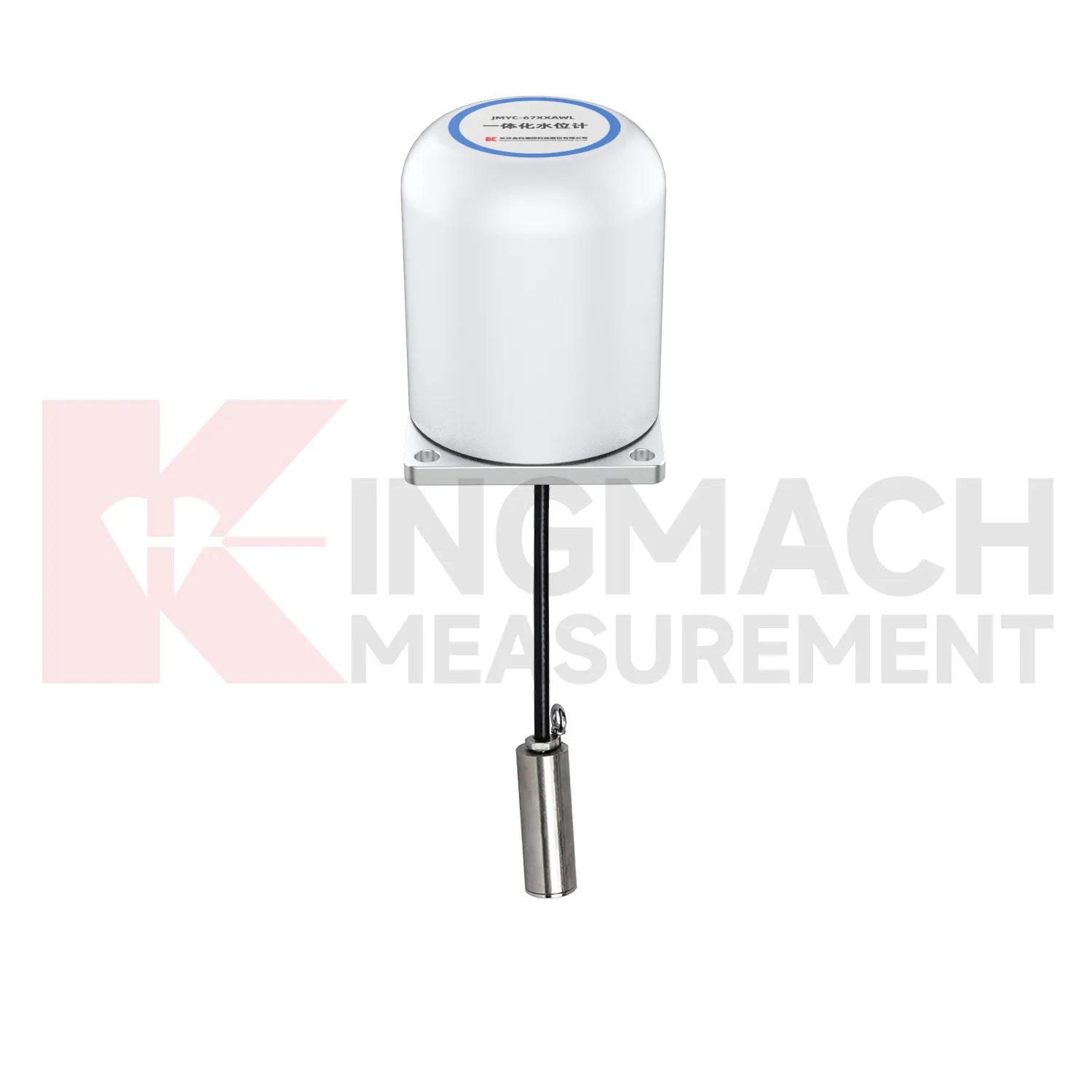
For remote reservoir, hydrology, or unattended dam points, the Kingmach JMYC-67XXAWL combines a differential-pressure sensor, built-in 4G DTU, and internal battery. Its 10 m, 20 m, and 30 m models can simplify deployment where a protected cable route and local power supply are difficult to provide. Its suitability still depends on cellular coverage, planned sampling interval, installation access, and a realistic battery service plan.
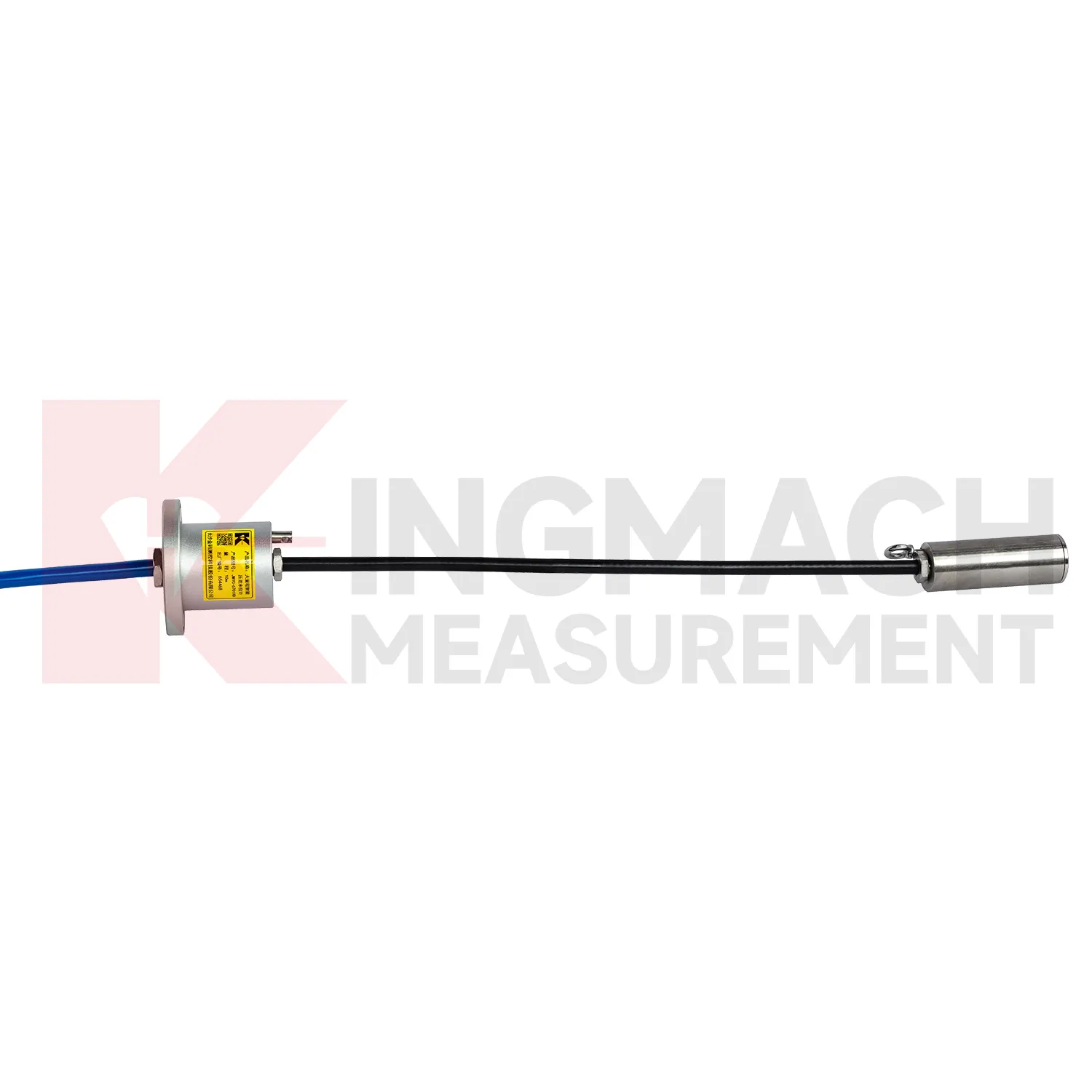
The Kingmach JMYC-67XXAD takes the wired integration route. Its RS485 interface and DC 9-24 V power requirement make it appropriate where a logger, power supply, protected cable route, and acquisition architecture have already been designed. Its 10 m, 20 m, and 30 m variants should be selected by the maximum expected head rather than the normal water level alone.
The specification difference should drive an engineering decision. The AWL model reports 1 mm resolution and +/-0.1% FS accuracy with battery-powered 4G transmission; the AD model reports 0.1 mm resolution and 0.2% FS accuracy with RS485 integration. Compare those figures with the entire measurement chain, including datum control, installation error, alarm purpose, and maintenance constraints, instead of choosing on one number.
JMYC-67XXAWL and JMYC-67XXAD comparison
| Item | JMYC-67XXAWL integrated 4G type | JMYC-67XXAD RS485 type |
|---|---|---|
| Typical fit | Remote reservoir, dam, hydrology, and unattended points where built-in 4G and battery operation simplify deployment. | Automated monitoring systems with planned logger, cable, and power infrastructure. |
| Model ranges | JMYC-6710AWL (10 m), JMYC-6720AWL (20 m), JMYC-6730AWL (30 m). | JMYC6701AD (10 m), JMYC6702AD (20 m), JMYC6703AD (30 m). |
| Water-level resolution | 1 mm. | 0.1 mm. |
| Water-level accuracy | +/-0.1% FS. | 0.2% FS. |
| Communication | 4G with built-in DTU. | RS485. |
| Power | Internal 3.6 V / 38 Ah non-rechargeable lithium battery. | DC 9-24 V. |
| Ingress protection | IP68. | IP68. |
| Main RFQ question | Is 4G coverage available, and what sampling interval is required for battery life? | Are the logger, cable route, power supply, and RS485 network fully defined? |
Installation factors that affect real accuracy
A correctly specified sensor can still give poor project data when the installation is weak. Use stable mounting, a documented vertical reference, protected cable routing, clean access to the tube or pipe, and a recorded zero or offset. In a relief pipe or embedded water-level tube, document the suspension arrangement and sensor position so future operators can interpret changes after maintenance or replacement.
Sediment, biofouling, turbulence, trapped air, cable strain, lightning exposure, and water hammer can all affect a measurement. Pressure-sensor installations need dry, open vent paths. Battery-operated stations need their communications retries and sampling schedule assessed against service life. RS485 networks need a defined plan for shielding, grounding, surge protection, and commissioning checks.
Dam monitoring workflow and verified application links
A dam monitoring system normally combines more than one sensor output. The water-level channel becomes more useful when it is reviewed with seepage, settlement, displacement, tilt, rainfall, and operational records. Kingmach's dam monitoring solution describes this system-level approach across structural, seepage, hydrological, environmental, and load observations.
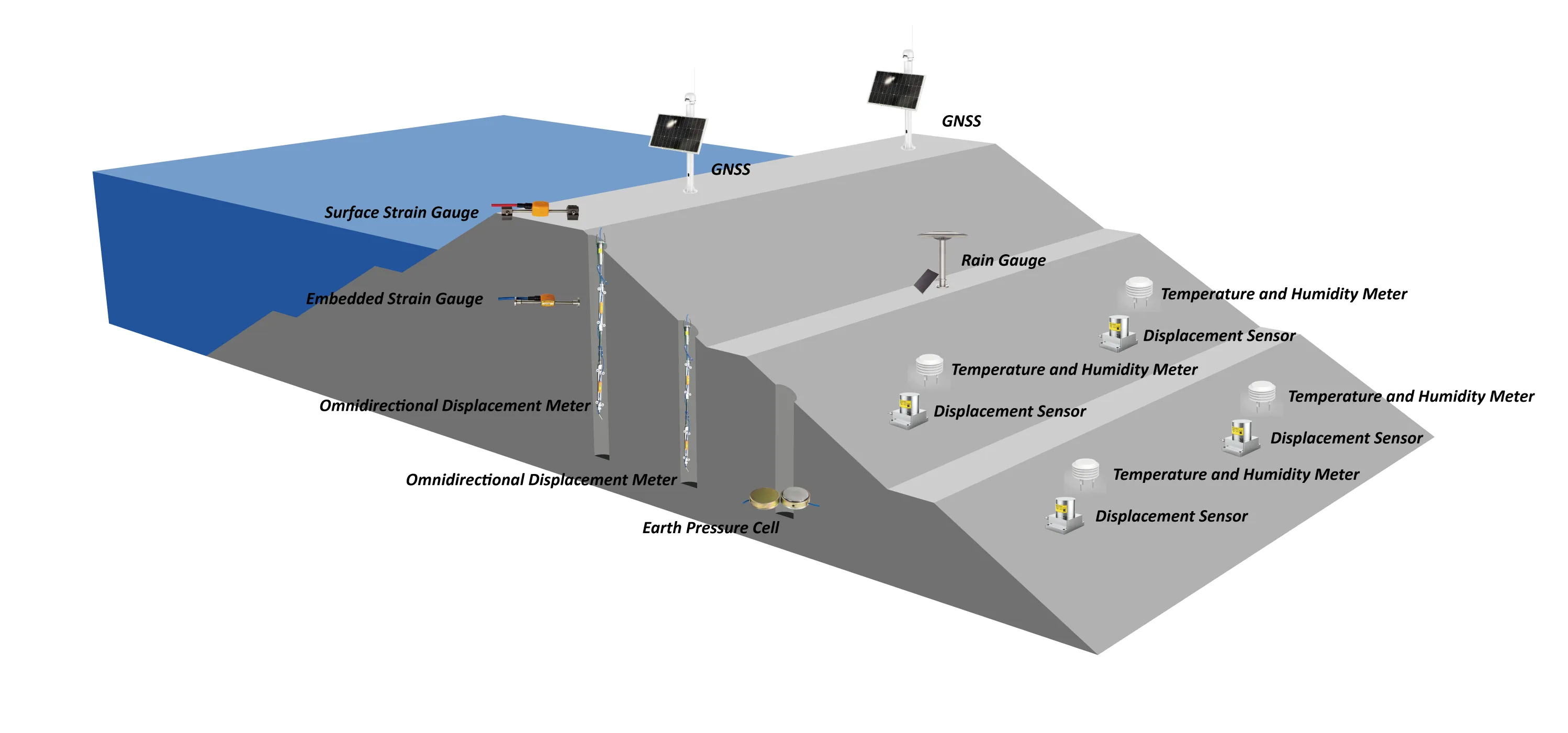
For the data path, define where data is collected, transmitted, reviewed, and retained before selecting a sensor. A remote point may require an integrated 4G device; a wired site may require a channel plan, data logger, protective cabling, and a review platform. The available readouts and data loggers and monitoring software provide relevant internal reference points for that RFQ discussion.
No site-specific dam performance case has been added to this article because the supplied material does not verify one for these two water-level models. A project inquiry should instead provide the site drawing, measurement purpose, instrumentation list, and acceptance criteria so the configuration can be reviewed against the actual installation.
Selection checklist for procurement and engineering teams
Measurement point
- Define whether the point is a reservoir surface, embedded tube, pressure relief pipe outlet, groundwater borehole, stilling well, or hydrology station.
- Confirm the maximum credible head, reference elevation, access constraints, and required range.
Technical system
- Set the accuracy and reporting target for trend review, alarm management, or operational reporting.
- Select 4G battery operation for remote points or RS485 for a wired acquisition network.
- Specify mounting, pipe geometry, cable routing, vent protection, grounding, surge protection, and the validation method.
Commercial and delivery
- Request the datasheet, calibration documentation, wiring diagram, installation guidance, IP details, packaging details, lead-time confirmation, and warranty terms.
Maintenance and acceptance
- Define inspection and cleaning intervals, battery replacement access where applicable, vent checks, logger checks, and comparison with a manual or surveyed reference.
Common buying mistakes
Comparing only resolution is a common error. A 0.1 mm display increment can be useful, but acceptance also depends on full-scale accuracy, installation geometry, temperature behavior, calibration conditions, and the stability of the reference. Set the required decision tolerance first, then compare the complete instrument and installation plan.
Communication is often decided too late. A low-power 4G device can reduce field work at a remote point, but it needs coverage and a battery service plan. A wired RS485 device may be easier to maintain in a completed acquisition network, but only if power, cable protection, grounding, and surge control are already in scope.
Ignoring vent maintenance creates another avoidable risk. A vented reference can reduce barometric error, but condensation, blockage, or water ingress can compromise readings. Add manual reference checks after installation, flooding, construction activity, and sensor replacement so the data record remains defensible.
Request a dam water-level sensor review
Provide the measurement point, maximum water head, required accuracy, sampling interval, available power, communication method, installation drawing, and data-integration requirements.
Contact Kingmach for a project reviewFAQ
What type of water level sensor is best for dam monitoring?
Pressure or differential-pressure sensors often suit submerged observation tubes, boreholes, relief pipes, and stilling arrangements. Radar or ultrasonic sensors can suit open-surface, non-contact measurement. Select the method after confirming the measurement point, range, power, communications, maintenance access, and the reference datum.
What accuracy should I require for dam water level monitoring?
Set the accuracy requirement from the engineering decision it supports. Trend review, alarm management, reservoir operation, and seepage assessment may require different tolerances. Review full-scale accuracy together with resolution, calibration conditions, installation offset, and field validation.
When should I choose a 4G integrated water level sensor?
A battery-powered 4G unit can simplify remote monitoring points where cable routing and local power are difficult. Confirm cellular coverage, reporting interval, alarm behavior, and battery replacement access before procurement.
When is an RS485 water level sensor a better fit?
RS485 is normally easier to integrate where a monitoring network already provides power, protected cables, a logger, and surge protection. Confirm the communication protocol, cable route, grounding plan, and channel capacity with the system integrator.
Why does a vented cable matter in pressure water level measurement?
A vented reference can reduce barometric pressure error in gauge-style level measurements. The vent still needs protection from condensation, water ingress, blockage, and physical damage, so it belongs in the commissioning and maintenance plan.